
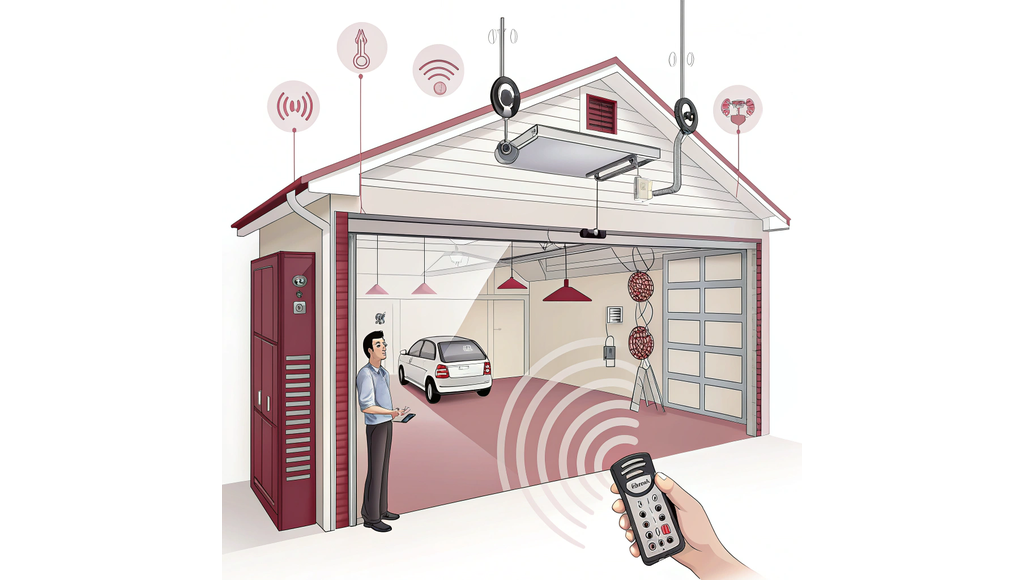
You press the button on your garage door remote and nothing happens. Or maybe the motor hums loudly but your door sits there refusing to budge. Opener problems always seem to strike at the worst possible moment, but most follow predictable patterns you can diagnose yourself.
The trick is knowing where to start looking. Some opener issues take five minutes and zero dollars to fix. Others need professional attention because they involve electrical components or worn mechanical parts that require specialized tools. Understanding the difference saves you time and keeps you safe.
Safety Note: If your garage door feels extremely heavy when you pull the emergency release or won't stay open manually, you likely have a broken spring rather than an opener problem. Springs require professional repair due to the high tension involved.
This guide walks through opener problems from simplest to most complex. We'll cover the quick fixes that solve most issues, how to identify motor and mechanical failures, sensor problems that prevent closing, and when repair stops making financial sense. For broader garage door issues beyond the opener itself, check out our complete Garage Door Repair Guide.
Quick Fixes That Solve Most Remote and Power Issues
Start with the easiest possibilities before assuming your opener needs major repair. Remote and power problems account for the majority of service calls, yet most homeowners can resolve them in minutes.
Replace your remote batteries first. This solves roughly 60% of "won't open" complaints. If the wall button works but your remote doesn't, you've found your answer. While you're at it, check if your remote needs reprogramming. Garage door remotes occasionally lose their connection to the opener, especially after power outages.
Next, verify the opener has power. Check your circuit breaker panel for a tripped breaker. Look at the outlet the opener plugs into and make sure it's receiving power. If your garage has a GFCI outlet, press the reset button. Sometimes the outlet trips without the breaker going.
Test your wall button directly. If it works when the remote doesn't, you've isolated the problem to the remote itself. If neither the wall button nor remote work, you're dealing with an opener issue rather than a control problem.
| Check This | Takes | Fixes |
|---|---|---|
| Remote batteries | 2 minutes | Dead remote |
| Circuit breaker | 2 minutes | Tripped power |
| Wall button | 1 minute | Isolates remote vs opener |
| Emergency release | 1 minute | Confirms opener engagement |
Pull the emergency release cord and manually lift your door halfway. If it stays put without you holding it, your springs are fine and the problem lives in the opener. If the door falls or feels impossibly heavy, you have a spring issue that needs professional attention.
Diagnosing Motor and Mechanical Problems
When your opener motor runs but produces no movement, you're likely facing worn gears or drive system failure. This accounts for about 40% of opener problems in units over 10 years old. The motor hums or runs, you hear grinding sounds, and maybe you smell burning plastic. Stop using the opener immediately when this happens.
Gear failure happens because plastic gears inside the opener wear down from repeated use. The motor spins freely without engaging the mechanism that actually lifts your door. You might see the chain or belt moving slightly but without enough force to pull the door up. This repair requires replacing internal components with parts specific to your opener model.
Pro Tip: Openers typically last 10 to 15 years before major mechanical parts start failing. If your unit is approaching this age and needs expensive repairs, replacement often makes more financial sense than fixing it.
Circuit board problems create similar symptoms. The opener might click when you press the button but the motor never engages. Or it runs briefly then stops. Modern openers rely on circuit boards to control motor operation, safety sensors, and remote signals. When boards fail, you're usually looking at replacement rather than repair.
Clicking without any motor sound often points to a failed capacitor. This electrical component helps the motor start. When it dies, you hear the relay click but nothing else happens. Some handy homeowners replace capacitors themselves, but working with electrical components carries shock risks if you're not experienced.
For detailed information on what new opener installation costs, including modern features that outperform older units, check our installation guide.
Sensor and Safety System Failures
Photo eye sensors cause more homeowner frustration than almost any other opener component. Your door starts closing then immediately reverses. Or it refuses to close at all, and the opener light blinks at you. These symptoms almost always trace back to sensor issues.
Start by cleaning both sensor lenses with a soft cloth. Dirt, cobwebs, and dust interfere with the invisible beam between sensors. The sensors mount on both sides of your garage door near the floor. Each has a small LED light that indicates status.
Check the LED lights on both sensors. You want steady lights, not blinking ones. Blinking means the sensors aren't aligned properly or aren't detecting each other's beam. Gently adjust the sensor brackets until both lights glow solid. The sensors need to point directly at each other with nothing blocking the beam path.
Sometimes sensor wiring gets damaged from garage activity, pets, or temperature changes. Look for frayed wires or loose connections where the wires attach to the sensors. If you find damage here, you'll need replacement sensors or professional wiring repair.
Quick Tip: Test your sensors monthly by closing the door and waving your hand through the beam. The door should immediately reverse. This simple check confirms your safety system works and prevents 95% of entrapment accidents.
Force settings can also trigger false reversals. Your opener has adjustments that control how much resistance triggers the automatic reverse. If the down force is set too light, the door reverses when it shouldn't. Most openers have adjustment screws or buttons labeled for up and down force. Make small adjustments and test between each change. For step-by-step sensor alignment help, see our sensor alignment guide.
When to Repair vs. Replace Your Opener
Age matters more than almost any other factor when deciding between repair and replacement. Garage door openers average 10 to 15 years of reliable service. Once yours crosses the 12-year mark, replacement usually beats repair for most major problems.
Run the numbers on your specific situation. Opener repairs typically run $150 to $350 depending on the problem. A completely new opener installed costs $400 to $800. If your repair estimate hits $250 and your opener is already 10 years old, you're spending more than half the replacement cost on aging equipment that might fail again soon.
New openers bring meaningful upgrades. Battery backup systems keep your door working during power outages. Rolling code technology prevents thieves from copying your remote signal. Belt drive systems run dramatically quieter than old chain drives, which matters if you have bedrooms near or above your garage. Smart openers let you control and monitor your door from your phone anywhere.
Watch for patterns that signal replacement time. Multiple repairs in a short span mean components are wearing out systemwide. Repeated sensor failures, frequent circuit board resets, or motors that struggle increasingly all point toward end of life. Modern safety features alone justify upgrading openers made before 2000.
Get multiple quotes before committing to either repair or replacement. Prices vary significantly between companies based on their parts sources, labor rates, and warranty coverage. Three estimates give you realistic expectations for your local market. Look for contractors with strong reviews across multiple platforms and proper licensing for your state.
Moving Forward With Your Opener
You now have a clear path from symptom to solution. Start with the simple checks like batteries and power sources. Move to sensor alignment if your door won't close. Call for professional diagnosis when you hear grinding, smell burning, or face repeated problems.
The boundary between DIY and professional help is straightforward. Remotes, sensors, and basic resets belong in your wheelhouse. Motor problems, gear replacement, and electrical issues need someone with the right tools and training. Making this distinction correctly protects both your safety and your wallet.
Test your garage door opener system this weekend while it's fresh in your mind. Run through the monthly safety check, clean your sensors, and listen for any new sounds during operation. Catching small problems early prevents emergency repairs down the road.
FAQs
Why is my garage door opener running but the door won't move?
This usually means worn gears inside the opener. The motor spins but can't engage the mechanism that lifts your door. You might hear grinding or humming sounds. This problem is common in openers over 10 years old and requires professional repair with manufacturer-specific parts. Stop using the opener immediately to prevent further damage.
How do I know if my garage door problem is the opener or the springs?
Pull the emergency release cord and manually lift your door halfway. If it stays in place without you holding it, your springs are fine and the problem is your opener. If the door falls or feels extremely heavy, you have a broken spring that needs professional repair. Never attempt spring repairs yourself due to high tension risks.
What causes my garage door to reverse immediately when closing?
Misaligned photo eye sensors cause most immediate reversals. Clean both sensor lenses and check that the LED lights on each sensor glow steady, not blinking. Adjust the sensor brackets until both point directly at each other. Dirt, cobwebs, or blocked beams also trigger reversals. Test monthly by waving your hand through the beam while closing.
Should I repair or replace my garage door opener?
Replace openers over 12 years old when facing repairs over $250. New openers cost $400 to $800 installed while repairs run $150 to $350. Older units lack modern safety features like battery backup and rolling code security. If you've had multiple repairs recently or smell burning from your motor, replacement makes more financial sense than continued repairs.
- garage door opener problems
- garage door won’t open
- garage door opener repair
- garage door sensor issues