
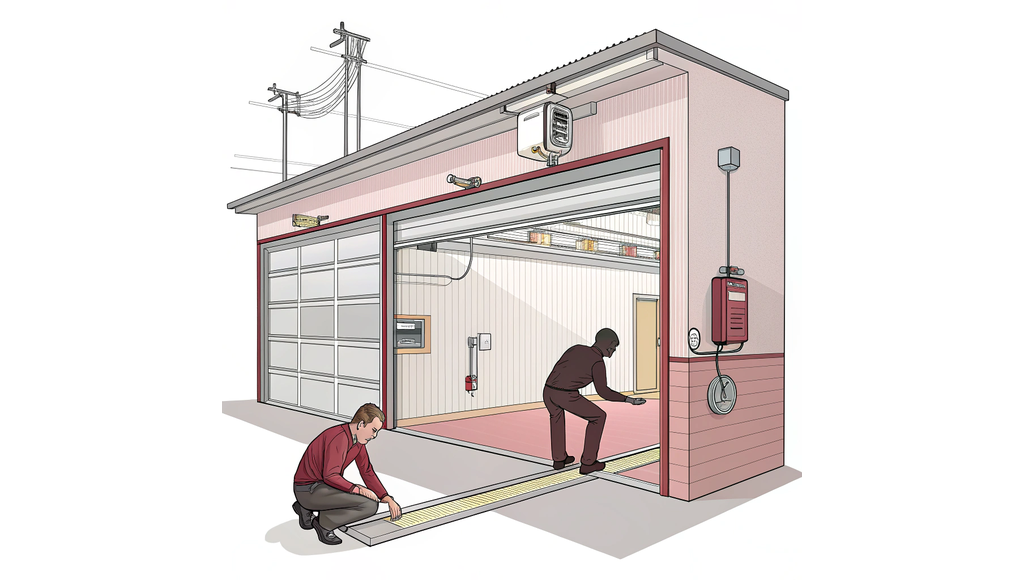
You press the button and your garage door starts closing. Then it stops six inches from the ground and reverses back up. Or maybe it gets halfway down and just quits. Either way, you're left with a partially open garage door that won't budge, and that's a security problem you need to fix today.
The good news? Most garage door closing problems come from one of four causes, and you can diagnose which one in about 15 minutes. Even better, the most common culprit is something you can fix yourself in under an hour without spending a dime.
Did You Know?: Misaligned or dirty safety sensors cause 40-50% of garage door closing failures, making them the first thing to check before anything else.
This guide walks you through each potential problem in order from most common to least common. You'll learn what to look for, how to fix it if you can, and when to stop and call someone who has the right tools and training. For a broader look at garage door problems and maintenance, check out our main garage door repair guide.
Check Your Safety Sensors First
Your garage door has two small sensors mounted near the floor on each side of the opening. They shoot an invisible infrared beam across the doorway. If anything blocks that beam while the door is closing, the door reverses to prevent crushing whatever is in the way. When these sensors get knocked out of alignment or accumulate dirt on their lenses, they think something is blocking the door even when nothing is there.
Start by looking at both sensor units. Each one has a small LED light. On most systems, you want to see steady lights on both sensors, not blinking ones. If the lights are blinking or off completely, the sensors aren't communicating properly.
Clean both sensor lenses with a soft cloth. Even a thin layer of dust or a spiderweb can interrupt the beam. Then check if the sensors are pointing directly at each other. Someone bumping into a sensor with a car, bike, or lawn mower can knock them out of alignment. Gently adjust them by hand until both indicator lights glow steadily, then try closing the door.
If cleaning and alignment don't work, you might need sensor replacement, which costs $85 to $100 for parts and labor. For detailed sensor adjustment techniques, see our safety sensor alignment guide.
Adjust Your Limit Switch Settings
Your garage door opener has limit switches that tell it exactly where the "fully open" and "fully closed" positions are. Over time, these settings drift due to vibration, temperature changes, or simple wear. When the close limit is set too high, the opener thinks the door is fully closed when it's actually still six to twelve inches off the ground.
Look at your opener unit mounted on the ceiling. You'll find two adjustment knobs or screws, usually labeled "up" and "down" or marked with arrows. The down limit is the one you need to adjust.
Pro Tip: Make limit switch adjustments in small increments, turning the knob just 1/4 turn clockwise at a time, then testing the door before making another adjustment.
Turn the down limit adjustment about 1/4 turn clockwise, which tells the opener to let the door travel a bit farther before stopping. Test the door. If it still doesn't reach the floor, make another 1/4 turn adjustment. Repeat this process until the door closes completely and the bottom seal makes firm contact with the floor.
If you've made several adjustments and the door still won't close, or if it closes but then immediately reverses, your problem isn't the limit switch. The force settings on your opener might need adjustment too, which you can learn about in our opener troubleshooting guide.
Inspect Tracks and Rollers for Problems
The metal tracks that guide your garage door up and down need to be properly aligned and clear of obstructions. When tracks bend, shift out of position, or accumulate debris, the door can bind and stop before reaching the fully closed position. Worn or damaged rollers create similar problems.
Walk along both sides of your door and look carefully at the vertical and horizontal track sections. Check for any visible bends, dents, or gaps between the track and the rollers. Look inside the tracks for dirt buildup, old grease that's turned into sticky gunk, or objects that shouldn't be there.
If you see debris, wipe it out with a cloth. Tighten any loose mounting brackets you find using a socket wrench. For minor track bends, you can sometimes use pliers to carefully bend the track back into position, but don't force it. You want the gap between the roller and track to be less than 1/4 inch all the way around.
Check your rollers for cracks, flat spots, or excessive wear. Metal rollers should spin freely. If they wobble or drag, they're worn out. Regular lubrication of garage door parts prevents many roller and track problems from developing.
Bent tracks or broken rollers need professional replacement, which costs $125 to $300 depending on the extent of the damage. A technician can handle this repair in one to two hours.
Recognize When Springs Need Professional Attention
Garage door springs counterbalance the weight of your door so the opener motor only needs to give it a gentle push. When springs weaken or break, the door becomes too heavy for the opener to move properly. You'll notice the door struggling to close, moving unevenly with one side lower than the other, or stopping partway through its travel.
Here's a simple test. Pull the red emergency release cord to disconnect the opener from the door. Manually lift the door about halfway up and let go. A properly balanced door stays in place. If it falls or sinks toward the ground, your springs have lost tension and need replacement soon.
Safety Note: Never attempt to replace garage door springs yourself. Torsion springs operate under 400+ pounds of tension and can cause serious injury or death if released improperly. This repair always requires professional service.
Look at your springs mounted above the door. If you see gaps or separations in the coils, or if the door feels extremely heavy when you try lifting it manually, the springs are failing. You might also hear a loud bang when a spring breaks, which sounds like something exploded in your garage.
Professional spring replacement costs $120 to $350 depending on whether you have torsion or extension springs and takes one to two hours. A technician has the specialized winding bars and safety equipment needed to handle this job safely. For detailed cost breakdowns and what to expect, read our spring replacement cost guide.
Springs last about 10,000 cycles, which translates to seven to ten years for most households. Once springs start failing, replacement is the only option.
Getting Your Door Closed Again
Most garage doors that won't close completely have sensor or limit switch problems, which means you can probably fix yours in the next hour without spending money. Start with the sensors since they're the most common cause. Clean them, check alignment, and test the door. If that doesn't work, adjust your limit switches in small increments until the door reaches the floor properly.
Track and roller problems take a bit more investigation but are still DIY-friendly for minor issues. Anything involving springs or cables requires professional help because the safety risks are too high for homeowners without specialized training and tools.
Once you get your door working again, add a monthly visual inspection to your routine. Catching small problems early prevents the inconvenience and security risk of a door that won't close when you need it to.
FAQs
Why does my garage door reverse when I try to close it?
Your garage door reverses because the safety sensors detect an obstruction, even if nothing is actually there. Dirty sensor lenses or misaligned sensors are the most common causes. Clean both sensors with a soft cloth and adjust them until they point directly at each other. You should see steady LED lights on both units when they're properly aligned.
How much does it cost to fix a garage door that won't close?
Sensor cleaning and limit switch adjustments cost nothing if you do them yourself. Sensor replacement runs $85 to $100. Track repairs cost $125 to $300 depending on damage severity. Spring replacement is the most expensive at $120 to $350. Most closing problems stem from sensors or limit switches, making them free or low-cost fixes.
Can I fix garage door sensor problems myself?
Yes, most sensor problems are DIY-friendly. Clean both sensor lenses, check that they point directly at each other, and look for steady LED lights on both units. These simple fixes solve about 40-50% of garage door closing issues without any tools or special skills. Sensor replacement requires basic wiring knowledge but remains manageable for most homeowners.
What causes a garage door to stop halfway when closing?
Weak or broken springs are the main cause when a door stops halfway down. The springs counterbalance your door's weight, and when they fail, the opener can't move the door properly. Incorrect limit switch settings, track obstructions, or worn rollers can also cause this problem. Test your springs by manually lifting the door halfway and releasing it.
- garage door reverses when closing
- fix garage door sensors
- garage door opener troubleshooting
- garage door stuck halfway