
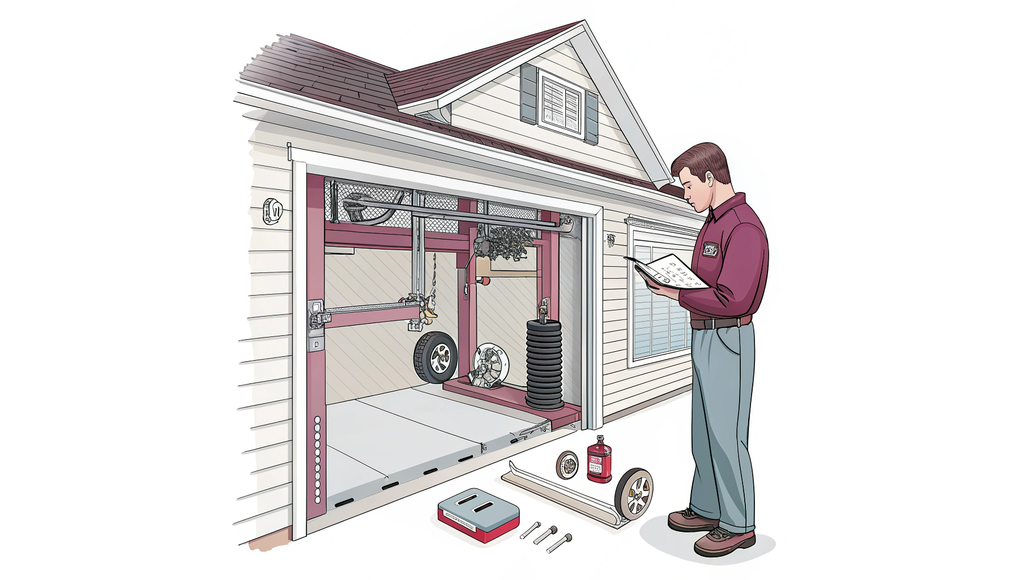
Most homeowners operate their garage doors 1,500 times a year without thinking about maintenance until something breaks. That reactive approach turns a $150 annual inspection into a $500 emergency repair when springs snap or cables fray. Annual professional maintenance catches problems early, extends your door's lifespan by years, and keeps your family safe from a 200-pound moving object under extreme tension.
Your monthly maintenance routine handles the basics like lubrication and visual checks. Annual professional service goes deeper with specialized testing, adjustments, and inspections that require training and tools most homeowners don't have. Think of it as the difference between checking your tire pressure and getting a full brake inspection.
Cost Reality: A single emergency spring replacement averages $300-400 with same-day service charges. Annual professional maintenance typically costs $100-150 and prevents most emergency repairs.
What Annual Garage Door Maintenance Actually Covers
Professional annual service includes tasks you can't safely or effectively perform yourself. Technicians measure spring tension with specialized tools, check cable wear patterns invisible to untrained eyes, and test opener force settings that prevent injuries. They catch spring fatigue before catastrophic failure, identify fraying cables before they snap, and adjust track alignment issues that cause premature roller wear.
The timing matters because seasonal temperature swings stress your door's components. Springs weaken from thousands of expansion and contraction cycles. Metal tracks shift slightly as your garage foundation settles. These gradual changes don't announce themselves until something fails completely.
| Task Type | Frequency | Who Handles It |
|---|---|---|
| Visual inspection, lubrication, basic testing | Monthly | Homeowner DIY |
| Deep cleaning, hardware tightening | Quarterly | Homeowner DIY |
| Spring tension testing, cable assessment, track alignment | Annually | Professional required |
| Force setting calibration, comprehensive safety testing | Annually | Professional required |
Seasonal maintenance addresses weather-specific concerns, but annual professional service evaluates your entire system regardless of season.
The Professional Annual Inspection Breakdown
A trained technician starts by measuring torsion spring tension using a calibrated torque meter. Springs lose tension gradually, and professional measurement catches this before your door becomes dangerously unbalanced. They inspect lift cables for internal wire breakage that's invisible until the cable suddenly fails under load.
Specialized Equipment: Technicians use torque wrenches, cable tension gauges, and laser alignment tools that aren't practical for homeowners to own. Attempting spring adjustment without these tools causes serious injuries every year.
Track alignment gets verified with precision levels because even a quarter-inch misalignment causes binding and accelerates roller wear. The opener's force settings receive calibration testing to ensure it stops when meeting resistance, preventing the door from crushing objects or injuring people.
Safety sensors get comprehensive testing beyond your monthly beam checks. Technicians verify response timing, measure beam strength, and test the auto-reverse under various conditions. They examine all hardware for stress cracks, test the emergency release mechanism, and inspect weatherstripping for gaps. If you're experiencing opener problems, annual service often identifies the root cause before it becomes a complete failure.
DIY Tasks Before Your Annual Service
Tighten all visible bolts and brackets you can reach without a ladder. Vibration loosens hardware over time, and addressing this before the technician arrives lets them focus on specialized tasks. Walk through your monthly inspection routine one more time, making notes of any unusual sounds, jerky movement, or visual wear.
Lubricate all moving parts a week before service so the technician can assess how components perform under normal operating conditions. Clean photo eye sensors and test the auto-reverse function so you can report any issues. Check sensor alignment and document if they seem to trigger false stops.
Look at your springs and cables for visible damage like rust spots, fraying, or deformation. Take photos if you see anything concerning. These visual records help technicians understand wear patterns and recommend appropriate service intervals.
Safety Boundary: Any bolt marked with red paint indicates a spring tension adjustment point. Never touch these. Torsion springs hold enough force to cause severe injuries or death if released improperly.
Cost Expectations and Best Timing
Professional annual garage door inspections typically range from $100-150 depending on your location and the service provider's experience level. This modest investment prevents emergency repairs that frequently exceed $300-800 for spring replacement, cable repair, or opener fixes with urgency charges added.
Schedule your annual service in spring or fall. Spring maintenance addresses winter damage from ice, temperature extremes, and increased cycling from holiday activity. Fall service prepares your door for winter's harsh conditions and identifies problems before you need reliable operation during cold months.
When booking service, ask if the quote includes adjustment and minor repairs or if those cost extra. Verify the technician is licensed and insured. Request documentation of the inspection for warranty purposes, as many manufacturers require proof of annual professional maintenance to honor claims.
If your door is older than seven years or operates more than twice daily, spring replacement costs become more relevant because wear accelerates with age and use. Annual inspection timing becomes even more critical for high-use doors.
Finding a qualified contractor makes the difference between thorough service and a quick visual glance. Look for companies with consistent recent reviews across multiple platforms and specific garage door specialization rather than general handyman services.
Annual maintenance isn't optional if you want your garage door to last 15-20 years instead of failing at 10-12 years. Schedule your inspection this month if you haven't had professional service in the past year. Your monthly DIY maintenance catches obvious problems, but annual professional service catches everything else before it breaks.
FAQs
How much does professional annual garage door maintenance cost?
Professional annual garage door maintenance typically costs between $100-150, depending on your location and service provider. This includes comprehensive inspection, spring tension testing, track alignment, safety feature calibration, and minor adjustments. The investment prevents emergency repairs that often run $300-800 for spring replacements or cable failures with urgency charges. Most homeowners save money long-term by catching problems early through preventive annual service.
What's the difference between monthly DIY maintenance and annual professional service?
Monthly DIY maintenance covers visual inspections, lubrication, basic testing, and hardware tightening that homeowners can safely handle. Annual professional service requires specialized tools and training for spring tension measurement, cable wear assessment, track alignment verification, and opener force calibration. Professionals catch internal component wear and gradual failures that aren't visible during routine homeowner checks, preventing dangerous malfunctions.
When is the best time to schedule annual garage door maintenance?
Spring and fall offer ideal timing for annual garage door service. Spring maintenance addresses winter damage from temperature extremes, ice, and increased holiday usage. Fall service prepares your door for harsh winter conditions and identifies problems before cold weather demands reliable operation. Avoid summer and deep winter when extreme temperatures make some adjustments more difficult and technician availability decreases.
Can I skip annual professional maintenance if I do monthly DIY checks?
Monthly DIY maintenance alone misses critical issues that require professional equipment and expertise. Spring tension gradually weakens without visible signs until catastrophic failure occurs. Cable fraying happens internally where homeowners can't see. Opener force settings drift over time, creating safety hazards. Annual professional service catches these hidden problems early, extending your door's lifespan from 10-12 years to 15-20 years.
- annual garage door inspection
- garage door safety checks
- preventative garage door maintenance
- professional garage door service