
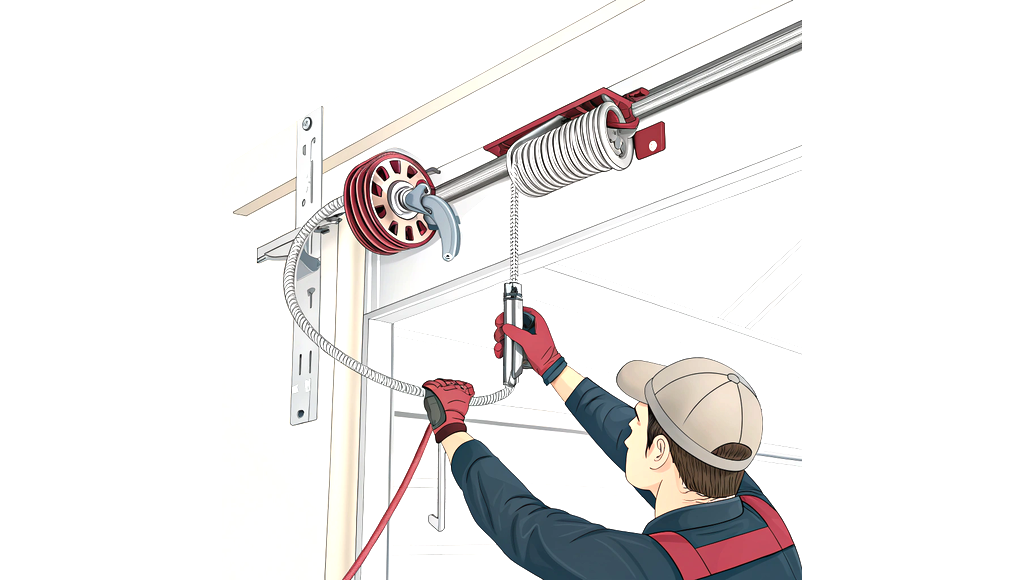
You press the button to open your garage door, and instead of smoothly rising, one side shoots up while the other stays put. Or maybe the door won't budge at all, and when you look closely, you spot a steel cable hanging loose from the side. Either way, you've got a broken cable, and you need to understand what comes next.
Garage door cables might look like simple steel wires, but they're doing heavy work every single time your door moves. When one breaks, your door becomes unbalanced and potentially dangerous. The good news is that cable replacement typically costs between $150 and $350, and most professionals can complete the job in one to two hours. The critical part is recognizing that this repair absolutely requires professional service, no matter how handy you are with tools.
Safety Note: Garage door cables work directly with springs under 200 to 400 pounds of tension. DIY cable replacement attempts send more than 20,000 people to emergency rooms annually. This isn't a project where you can save money by doing it yourself.
Here's what you need to know about identifying cable problems, understanding repair costs, and getting your door working safely again.
What garage door cables do and why they break
Think of your garage door cables as the connection between your springs and the actual door. On torsion spring systems (the most common type), cables wind around drums as the door lifts, guided by the spring's stored energy. Extension spring systems use cables running alongside the tracks. Either way, these galvanized steel cables bear your door's full weight, which ranges from 130 to 180 pounds for a single-car door and up to 300 pounds for double-wide models.
Cables typically last 10 to 15 years or about 10,000 to 15,000 opening and closing cycles. They fail for predictable reasons. Worn drums or pulleys create slippage and fraying. Spring imbalances put uneven stress on one cable. Sometimes it's simply age and metal fatigue. Heavier insulated or wood doors accelerate wear by 20 to 30 percent because they put more constant load on the cables.
When one cable breaks, many homeowners wonder if they can just replace that single side. Here's the reality. Cables wear at similar rates, so if one failed, the other isn't far behind. About 60 percent of single-cable fixes lead to the second cable breaking within months. Always replace both together. This relates directly to your spring system's overall balance, since cables and springs work as matched pairs.
How to spot cable problems before complete failure
You don't need to wait for complete cable failure to know there's a problem. Start with visual inspection. Look at the cables on both sides of your door. Healthy cables appear smooth and tightly wound. Warning signs include visible fraying where you can count five or more broken strands, rust buildup, kinking, or cables that look slack and hang loose instead of staying taut.
Pay attention to how your door operates too. If one side sits noticeably higher than the other when closed, that's cable trouble. Grinding noises during operation often mean cables slipping on worn drums. A door that suddenly drops an inch or two when opening has lost cable tension. Try this simple test when you're investigating. Pull the emergency release handle to disconnect your door from the opener, then manually lift the door halfway and let go. A properly balanced door should stay roughly where you left it. If it falls, your cables or springs need attention.
The difference between addressing cable issues early versus waiting for complete failure saves you money and prevents more serious damage. For a detailed look at specific visual cues, check our guide on frayed cable warning signs.
Maintenance Alert: Annual inspections catch 70 to 80 percent of cable issues before they become emergencies, extending your overall door life by two to five years. That $100 inspection prevents a $350 emergency repair call at 7 AM on a Tuesday.
What cable repair costs and timeline to expect
National averages for cable replacement fall between $150 and $350, which includes both labor and parts for replacing both cables. Standard replacement jobs with no complications typically cost $150 to $250. Emergency or after-hours service adds a premium of $100 to $200, bringing your total to $250 to $350 or higher. If your technician discovers worn drums or pulleys during the cable replacement (which happens in about half of cable jobs), expect system overhaul costs between $200 and $400.
Here's what those prices buy you in terms of service and timeline:
| Repair Type | Average Cost | Service Timeline | Warranty Coverage |
|---|---|---|---|
| Standard cable replacement (both sides) | $150-$250 | 1-2 hours | 1 year typical |
| Emergency/after-hours service | $250-$350+ | Same timeline, faster arrival | Same as standard |
| Cables plus drum/pulley replacement | $200-$400 | 1.5-2.5 hours | 1-2 years |
| Realignment (no replacement needed) | $100-$200 | Under 1 hour | 30-90 days |
Most professionals can arrive within one to four hours for same-day service in urban areas. Emergency calls get prioritized within an hour, which matters when your door is stuck open and your garage is exposed. The actual repair work takes one to two hours, including releasing spring tension (the dangerous part), removing old cables, installing new ones precisely wound to match your door height, and running 10 to 20 test cycles to verify proper balance.
Geographic location affects pricing. Urban areas typically charge 20 to 40 percent more than rural zones due to higher labor rates. Your door size matters too. A standard 16-foot double door costs $50 to $100 more than a single seven-foot door because it requires longer, heavier-duty cables. For a complete breakdown of pricing factors in your area, see our detailed cable replacement cost guide.
Why you need a professional and how to find one fast
Every conversation about garage door cable replacement needs to start with this reality. The springs your cables attach to hold anywhere from 200 to 400 pounds of tension. When amateurs attempt cable work without proper tools and training, springs snap, cables whip, and doors fall. The failure rate for DIY cable replacement sits around 90 percent, meaning nine out of ten attempts either fail to fix the problem or create new damage.
Professional technicians use specialized winding bars, proper securing clamps, and techniques developed specifically for safely releasing and reapplying spring tension. They know how to calculate correct cable length, wind drums to precise specifications, and verify balance through systematic testing. You don't own these tools, and buying them for a one-time repair makes no financial sense.
Finding a reliable professional quickly matters when your door is broken. Use platforms that aggregate ratings from Google, BBB, Angi, and Yelp to identify contractors with consistently high scores across multiple review sources. When you contact companies, ask them to conduct a full system inspection, not just replace the cables. This adds $50 to $100 to your bill but catches related problems in 70 percent of cases, preventing callback visits for issues that were already developing.
Watch for red flags that signal unprofessional operators. Quotes under $100 aren't realistic when you factor in quality parts and skilled labor. Companies that can't provide proof of licensing and insurance create liability risks if something goes wrong. Be suspicious of technicians who immediately recommend complete door replacement unless your door is over 20 years old or has extensive additional damage.
Expect a one-year warranty on labor as standard, matching the manufacturer's warranty on cable parts. Same-day service should be available in most metropolitan areas without requiring emergency premium pricing during normal business hours. For more guidance on vetting contractors and asking the right questions, review our recommendations on questions to ask before hiring.
Broken garage door cables need immediate professional attention, both for safety and to prevent additional damage to your door system. With realistic cost expectations between $150 and $350 and service timelines of one to two hours, this repair is straightforward when handled by qualified technicians. Don't wait for complete failure. Address fraying or operational symptoms as soon as you notice them. Using vetted local professionals through directory services with aggregated ratings helps you find reliable help quickly while avoiding the contractors who cut corners or overcharge. Your garage door handles serious weight every day. Trust that work to people who have the right tools and training to do it safely.
FAQs
How do I know if my garage door cable is broken?
Look for visible signs like a slack cable hanging loose on one side, or one side of the door sitting higher than the other. You might also hear grinding noises during operation or notice the door tilting severely when opening. If you disconnect the opener and manually lift the door, it should stay balanced halfway up. If it drops, your cables or springs need attention.
Can I still use my garage door if one cable is broken?
No, stop using your garage door immediately if a cable breaks. Operating with one broken cable puts extreme stress on the remaining cable, which will likely snap soon. The door becomes dangerously unbalanced and could fall unexpectedly, causing serious injury or damaging vehicles. Disconnect your automatic opener and keep the door closed until a professional completes repairs.
How much does it cost to replace garage door cables?
Expect to pay between $150 and $250 for standard cable replacement on both sides during regular business hours. Emergency or after-hours service typically costs $250 to $350. If your technician finds worn drums or pulleys during the repair, total costs may reach $200 to $400. Most jobs take one to two hours and include a one-year warranty.
Why can't I replace garage door cables myself?
Garage door cables attach to springs holding 200 to 400 pounds of tension. Without specialized winding bars, securing clamps, and proper training, you risk serious injury from snapping springs, whipping cables, or falling doors. DIY attempts fail about 90 percent of the time and send over 20,000 people to emergency rooms annually. Professional service costs $150 to $350, far less than medical bills.