
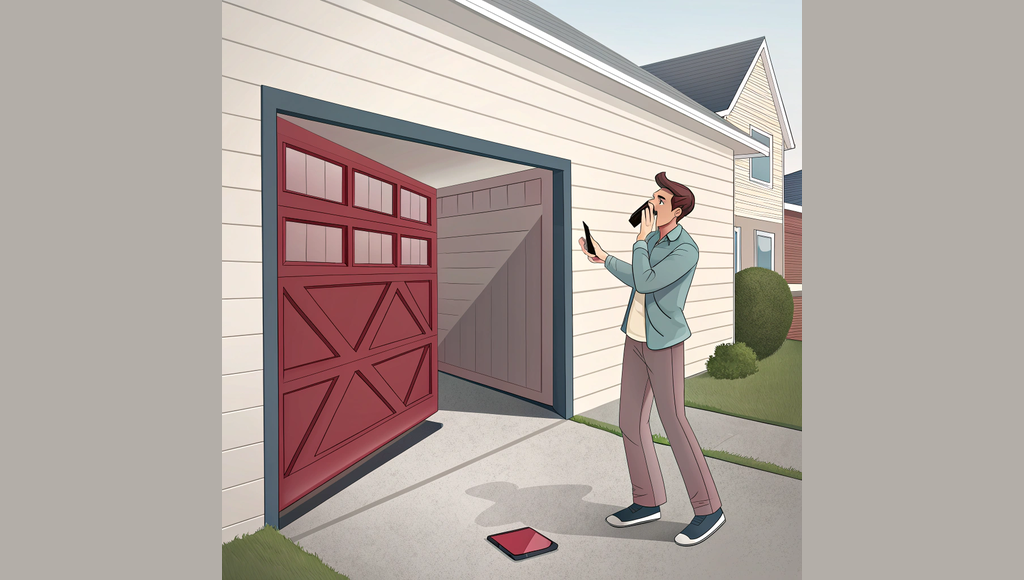
Your garage door just broke and you need help fast. Here's exactly what to do right now to stay safe, secure your home, and get professional help quickly without making costly mistakes.
Your car is trapped inside, you're already late for work, and your garage door won't budge. Or maybe it's worse. The door is stuck halfway open, a spring snapped with a loud bang, or the whole thing came off the tracks. These situations happen more often than you'd think, and how you respond in the next few minutes matters.
A true garage door emergency means you can't secure your home, access your vehicle, or the door poses an immediate safety risk. These aren't situations where you troubleshoot for an hour or watch YouTube tutorials. You need professional help, but first you need to make the situation safe and understand what you're dealing with.
Safety Note: Over 1,600 people end up injured every year attempting garage door repairs themselves. Springs alone hold 200 to 400 pounds of tension. What looks like a simple fix can send you to the emergency room.
The steps you take before help arrives determine whether this stays a manageable problem or turns into a bigger mess. Here's your action plan.
Know what you're dealing with
Different emergencies require different responses. A broken spring is dangerous but predictable. A door off its tracks can cause structural damage if it falls. An opener that suddenly quit might have a simple cause or signal a bigger problem.
Listen to what your door is telling you. A loud snap followed by the door refusing to move usually means a broken spring. You might see a gap in the coiled spring above the door or notice one spring hanging loose on extension spring systems. If the door looks crooked, sits unevenly, or has visible gaps between panels and tracks, it's likely off track. When you hear the motor running but nothing happens, the problem might be a broken chain, stripped gears, or a disconnected trolley.
Quick Tip: Pull the manual release handle and try lifting the door a few feet. If it drops immediately, your springs are definitely broken. A balanced door should stay put when you let go halfway up.
| Emergency Type | What You'll Notice | Danger Level | Can It Wait? |
|---|---|---|---|
| Broken spring | Loud snap, door won't lift, visible gap in spring | High | No |
| Door off track | Crooked appearance, bent rails, door stuck | Very High | No |
| Stuck open | Door stops mid-cycle, security risk | Medium | No |
| Opener failure | Motor runs but door doesn't move | Low to Medium | Sometimes |
Check our guide on garage door spring replacement if you suspect spring failure, or see the off track repair instructions for derailment issues.
Secure the scene immediately
Stop using the opener right now. Every time you press that button with a broken component, you risk making the damage worse or causing the door to fall. Walk to the opener unit and unplug it if you can reach it safely. If not, just stop pressing buttons.
Pull the red manual release handle hanging from the opener trolley. This disconnects the door from the motor so you can move it by hand if needed. Don't touch the springs, cables, or the metal brackets at the bottom corners of the door. These components stay under extreme tension even when the door isn't moving.
If your door is stuck open, you have a security problem. You can't leave your garage exposed, especially overnight. Try gently lowering the door manually, but only if it moves smoothly without resistance. If it feels stuck or heavy, leave it alone. For a door that won't close, move valuables away from the opening, consider parking vehicles elsewhere, and if weather is an issue, hang a tarp across the opening temporarily.
Clear the area around the door. Move bikes, tools, storage boxes, anything that might be in the technician's way. This isn't just courtesy, it speeds up the repair significantly. The faster they can access the problem, the sooner you're back to normal.
For more context on which components pose the biggest risks, review our overview of garage door safety features.
Get professional help the right way
Not every broken garage door requires a midnight service call at premium rates. If your door won't open but your car is already out and the garage is secure, you can usually wait until morning for a regular service appointment. True emergencies involve security risks, trapped vehicles you need immediately, or doors that could cause property damage or injury if left unattended.
When you call for help, have specific information ready. Know your door type (single or double, sectional or one-piece), what happened (sudden snap, gradual failure, impact damage), and what you're observing right now (door position, unusual sounds, visible damage). This helps the dispatcher send the right technician with the correct parts.
Response Time: Most emergency services in urban areas arrive within 1 to 2 hours. Rural areas might take longer. If someone promises 20 minutes, be skeptical. Quality technicians don't teleport.
Find vetted providers through services that aggregate ratings from multiple sources. You're making a quick decision under stress, which is exactly when people fall for scams or overpriced services. Look for companies with consistent ratings across Google, BBB, and Angi platforms. GarageDoorHandbook specializes in connecting homeowners with pre-screened local professionals who meet quality standards.
Ask about service call fees before they arrive. Most emergency services charge $75 to $150 just to come out, which typically applies toward the repair if you proceed. Get a ballpark estimate for your specific problem. A broken spring should cost $250 to $350 for most residential doors. If someone quotes dramatically different numbers, get clarification about what's included.
For more guidance on finding reliable emergency services, check our detailed resource on 24 hour garage door repair services. You can also review typical emergency repair costs to set realistic budget expectations.
What happens next and what it costs
Emergency garage door repair typically takes 1 to 2 hours from arrival to completion for most common problems. The technician will diagnose the issue first, which takes 15 to 30 minutes. They'll test the door manually, inspect springs and cables, check the opener, and identify any secondary damage you might have missed.
You'll get a written estimate before work begins. Emergency service costs more than scheduled repairs because you're paying for immediate availability and after-hours work. Expect to add $50 to $150 to normal repair prices for evening, weekend, or holiday service. A spring replacement that costs $200 during business hours might run $300 at midnight. Cable repairs, opener fixes, and track realignment follow similar premium structures.
Most repairs for single-component failures complete in under two hours. Spring replacement on a standard two-car garage takes about an hour once the technician starts working. Track realignment might need two to three hours if there's structural adjustment involved. If your door is very old or the damage is extensive, the technician might recommend replacement instead of repair.
Prepare the work area before the technician arrives. Clear a path to the garage. If you have vehicles inside that you can move manually (push them out), do it. Have your account information ready if you need to call your homeowner's insurance. Most technicians accept multiple payment methods, but emergency calls typically require payment upon completion rather than billing later.
Get a receipt with warranty information before the technician leaves. Reputable companies warranty emergency repairs the same as scheduled work, usually at least one year on labor. Ask what's covered and what to do if the same problem returns.
Garage door emergencies feel overwhelming when they happen, but they're manageable with the right approach. You've now got a clear protocol. Assess what broke, secure the scene safely, call a vetted professional with the right information, and understand what to expect from the service call.
The key is recognizing what you can handle and what requires expertise. Springs, cables, and heavy components aren't DIY projects no matter how handy you are. For everything else, start with our comprehensive Garage Door Repair Guide to learn preventive maintenance that helps you avoid future emergencies altogether.
FAQs
How do I know if my garage door problem is a real emergency?
Your situation qualifies as an emergency if you can't secure your home, need your trapped vehicle immediately, or the door poses safety risks. A door stuck open overnight creates a security problem. A broken spring with the door halfway down risks sudden collapse. If you can safely secure the garage and access your car, most issues can wait until morning for regular service rates.
What should I do immediately when my garage door breaks?
Stop using the opener right away to prevent further damage. Unplug the unit if you can reach it safely. Pull the manual release handle to disconnect the door from the motor. Never touch springs, cables, or bottom brackets as they stay under extreme tension. Clear the area around the door and secure any valuables if the door won't close completely.
How much does emergency garage door repair cost?
Emergency repairs typically cost $50 to $150 more than regular service because you're paying for immediate availability. Most services charge $75 to $150 just to arrive, which usually applies toward the repair. A standard spring replacement runs $200 during business hours but might cost $300 at midnight. Expect similar premiums for evening, weekend, or holiday calls.
How long does emergency garage door repair take?
Most emergency repairs take one to two hours from arrival to completion. The technician needs 15 to 30 minutes for diagnosis, then provides a written estimate before starting work. Spring replacements typically finish in about an hour. Track realignment might need two to three hours depending on structural issues. Response time in urban areas usually runs one to two hours after your call.