
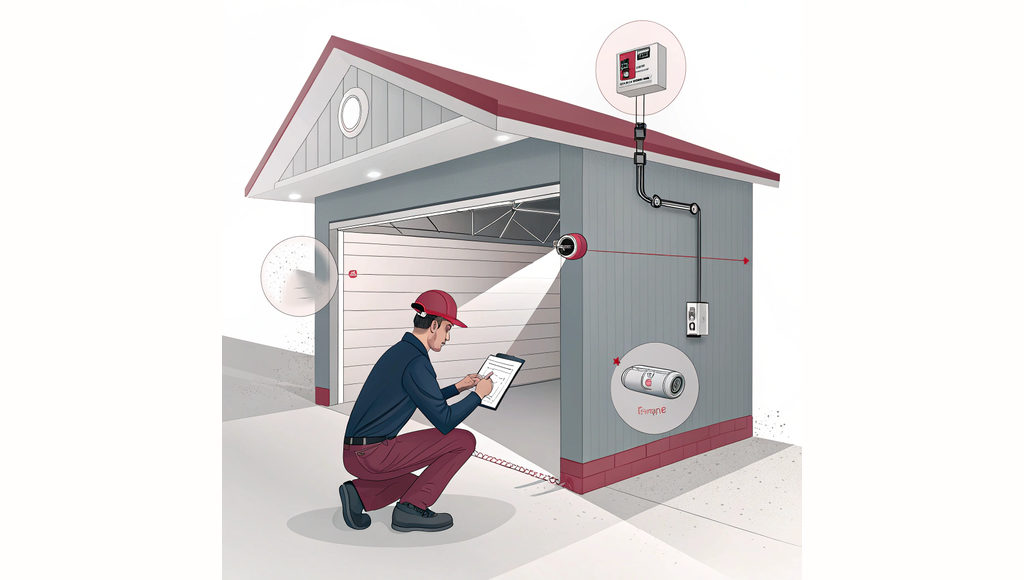
It's 6:45 AM on a Tuesday. You're running late for work, you hit the remote, and nothing happens. You press it again. Still nothing. Your garage door opener has picked the worst possible moment to stop working.
Before you panic and call for emergency service, you should know that most opener problems resolve quickly with systematic troubleshooting. About 80% of malfunctions come from just a handful of issues, and safety sensors alone account for 70-80% of all failures according to manufacturer repair data. The good news is you can diagnose most problems in 15 to 30 minutes by working through a logical sequence of checks.
Safety Note: Never touch the springs, cables, or bottom brackets during troubleshooting. These components are under extreme tension and cause serious injuries. Stick to the opener unit, sensors, and remote controls.
This guide walks you through the exact troubleshooting steps professionals use, starting with the simplest fixes and progressing to issues that require expert help. For broader garage door problems beyond the opener itself, check out our complete garage door repair guide for comprehensive diagnostic help.
Check power and basic functions first
Start with the obvious stuff that solves problems more often than you'd think. Plug another device into the same outlet your opener uses. If that device doesn't work either, you've found your problem. Check your home's circuit breaker panel and reset the garage circuit if it's tripped. This simple step fixes about 20% of "broken" openers.
Power cycle the opener unit by unplugging it for 15 seconds, then plugging it back in. This resets the logic board and clears temporary glitches. While you're at it, test whether the wall button works when the remote doesn't. If the wall button operates the door fine, you've isolated the problem to the remote system, and you can jump ahead to reprogramming steps.
Check your wall panel for a lock mode button. This feature disables all remote operation, and homeowners accidentally engage it more often than you'd expect. It's designed to prevent operation while you're on vacation, but it mimics a complete system failure when you've forgotten it's on.
If you're still getting no response from any control method, and you've confirmed the outlet has power, the issue likely sits in the circuit board or motor. That's your signal to consider professional opener repair or replacement. For issues specific to remote controls, our detailed remote troubleshooting guide covers battery replacement and signal interference problems.
Inspect and align safety sensors
Those two small boxes mounted near the floor on each side of your door opening cause the majority of opener headaches. One sends an infrared beam, the other receives it. If anything interrupts that beam, your door won't close. The system thinks something is in the way, which is exactly what it's designed to do.
Look at both sensors and make sure they point directly at each other. They should sit about six inches off the ground, perfectly aligned. Even a slight bump from a stored item, a basketball, or a broom handle can knock them out of position. Check the LED lights on each sensor. You typically want to see a steady green light on the receiving sensor and a steady indicator on the sending unit.
Clean both lenses with a soft cloth. Dust, spider webs, and even direct sunlight can block the beam. If you live in a snowy climate, check for ice buildup on the sensor faces. Seasonal interference accounts for a surprising number of service calls that homeowners can fix themselves in under five minutes.
Quick Test: Hold down the wall button continuously while the door is closing. If the door closes when you hold the button but not when you press it normally, your sensors are definitely the problem.
Trace the sensor wires back to the motor unit and look for any visible damage, cuts, or loose connections. If the wiring looks intact and the sensors are aligned and clean, but you're still having issues, check our comprehensive sensor alignment and testing guide for advanced diagnostic steps.
Reset and reprogram remotes and keypads
Remote and keypad issues make up about 15% of opener problems. Start by replacing the batteries in your remote. Weak batteries fail programming attempts about 40% of the time, and they're the cheapest fix you'll ever make.
Find the learn button on your opener motor unit. It's usually on the back or side panel, colored red, yellow, orange, or purple depending on your opener's age. To clear all existing codes and start fresh, press and hold this button for 6 to 10 seconds until the indicator light turns off. This wipes the opener's memory of all previously programmed remotes and keypads.
Now you'll reprogram your devices one at a time. Press and release the learn button once. The indicator light will turn on and stay lit for about 30 seconds. During this window, press and hold the button on your remote that you want to program. When the opener's lights flash or you hear a click, the remote is programmed. Test it before moving to the next device.
For keypads, the sequence is similar. Press the learn button on the motor unit, then immediately go to your keypad and enter your desired four-digit PIN followed by the enter or program button. The timing matters here. You have roughly 30 seconds from when you press the learn button to when you complete the keypad entry.
If you're upgrading your system or want to add smartphone control, smart garage door opener installation provides detailed guidance on modern connectivity options. For keypad-specific programming issues or advanced features, see our keypad programming instructions.
Identify mechanical issues requiring professional help
Some problems signal it's time to stop troubleshooting and call someone who does this for a living. Start with a balance test. Pull the red emergency release cord to disconnect the door from the opener. Manually lift the door about halfway up and let go. A properly balanced door stays roughly where you leave it. If it falls down or shoots up, your spring tension is off, and you need professional adjustment.
Listen carefully to the sounds your opener makes. A grinding noise usually indicates worn gears inside the motor unit. A clicking sound often points to chain or belt problems. Humming without movement means the motor is running but can't engage the drive mechanism. Each of these symptoms suggests repairs that typically cost between $150 and $500 depending on what needs replacing.
Safety Warning: If you see gaps in your torsion springs (the large coils above the door), stop using the opener immediately and call a professional. Broken springs require specialized tools and training. DIY spring work sends people to emergency rooms every year.
Check your chain or belt for proper tension. It should have a slight sag, about half an inch of give when you push up on it midway between the opener and the door. Too tight and it strains the motor. Too loose and it can slip off the sprocket. Some models have a tension adjustment, but if you're not comfortable making mechanical adjustments, leave this to the pros.
Many modern Chamberlain and LiftMaster openers display diagnostic codes through LED blinks. One blink might indicate a sensor issue. Two blinks could mean a hard-stop error. Consult your owner's manual to decode what your specific opener is telling you.
| Symptom | Likely Cause | DIY or Pro | Estimated Cost |
|---|---|---|---|
| Door reverses immediately | Sensor misalignment | DIY | $0-10 |
| Remote works, wall button doesn't | Wiring issue | DIY | $20-50 |
| Motor hums, door doesn't move | Broken gear/chain | Pro | $150-350 |
| Grinding noise during operation | Worn drive assembly | Pro | $200-400 |
| Door won't stay balanced | Spring adjustment needed | Pro | $150-300 |
| Opener runs but door barely moves | Weak/broken springs | Pro | $200-350 |
Following this troubleshooting sequence resolves about 85% of opener issues without a service call. You've eliminated power problems, aligned the sensors, reprogrammed your controls, and identified when mechanical issues exceed DIY boundaries. The systematic approach saves time because you're not randomly trying fixes or replacing parts that aren't actually broken.
Regular maintenance prevents many of these problems from happening in the first place. Our garage door maintenance schedule outlines simple monthly checks that catch issues before they strand you in your driveway. For problems you can't resolve yourself, or when you've identified a mechanical issue that requires professional expertise, connecting with qualified local technicians through GarageDoorHandbook ensures you're working with vetted contractors who have the tools and experience to fix it right the first time.
FAQs
Why does my garage door opener work sometimes but not others?
Intermittent failures usually point to sensor alignment issues or weak remote batteries. Environmental factors like direct sunlight, temperature changes, or vibrations from closing can shift sensors slightly out of alignment. Test by holding the wall button continuously while closing. If that works but normal operation doesn't, your sensors are the problem. Replace remote batteries and clean sensor lenses to eliminate the most common causes.
How do I know if I need to replace my garage door opener or just repair it?
If your opener is over 15 years old, making grinding noises, or requires frequent repairs, replacement makes more sense financially. Modern openers cost $200 to $500 installed and include safety features older models lack. However, simple fixes like sensor alignment, remote programming, or chain tension adjustments are worth doing first. Calculate repair costs against replacement value before deciding.
Can I bypass the safety sensors if they keep causing problems?
Never permanently bypass safety sensors. They prevent the door from closing on people, pets, or vehicles, which can cause serious injuries or property damage. You can override sensors temporarily by holding the wall button continuously, but this is only for testing purposes. If sensors malfunction repeatedly, replace them rather than disabling a critical safety feature required by federal law since 1993.
What does it mean when my garage door opener motor runs but the door doesn't move?
A running motor without door movement indicates broken gears inside the opener unit, a snapped chain or belt, or broken torsion springs. Disconnect the door using the emergency release and try lifting it manually. If it's extremely heavy or won't budge, you likely have broken springs. This requires immediate professional service as these repairs involve dangerous high-tension components.