You're probably here because you got a quote for garage door installation that made your eyes water, and now you're wondering if the contractor saw you coming. Or maybe you're planning ahead, trying to figure out what you'll actually need to budget before you start calling around. Either way, you're in the right place.
Here's what nobody tells you upfront: garage door installation costs vary wildly, and the reasons aren't always obvious. The same basic job might run $800 at one company and $2,400 at another, and both might be completely legitimate prices depending on what's actually included. The key is understanding what you're paying for so you can spot a fair deal and avoid getting taken for a ride.
Quick Insight: Most homeowners spend between $1,200 and $1,800 for a standard garage door installation, but the final number depends heavily on your door type, size, and whether your existing setup needs modifications.
Before You Start Estimating
Let me be straight with you about something important. Those online calculators that promise to tell you exactly what your installation will cost in 30 seconds? They're making educated guesses at best. The reality is that your garage has unique characteristics that affect both labor and materials, and there's no way to account for all of them without someone actually looking at your situation.
That said, you can get pretty close to an accurate estimate if you know what variables matter and how they affect pricing. The goal here isn't to replace a professional quote but to give you enough knowledge to evaluate whether the quotes you receive are in the ballpark or completely out in left field.
Think of this like getting your car repaired. If you walk into a shop with zero knowledge about what a brake job should cost, you're vulnerable. But if you know the typical range and what factors push the price higher or lower, you can have an informed conversation and make a confident decision.
Understanding the Base Price Components
When you get a quote for garage door installation, you're actually paying for several distinct things bundled together. Let's break them down so you know where your money is going.
The door itself is obviously the biggest chunk. A basic steel door for a single-car garage might run $300 to $600 for the material alone, while an insulated wood door for a two-car garage could easily hit $2,000 to $3,500. The material matters tremendously here. Steel is affordable and durable but dents easily. Wood looks beautiful but requires regular maintenance. Composite materials split the difference on both price and upkeep.
Labor typically accounts for 30 to 50 percent of your total cost. For a straightforward replacement where the existing tracks and opener work fine, you might pay $200 to $400 in labor. But if the installer needs to modify the framing, install new tracks, or work around unusual structural issues, that number can double or triple quickly.
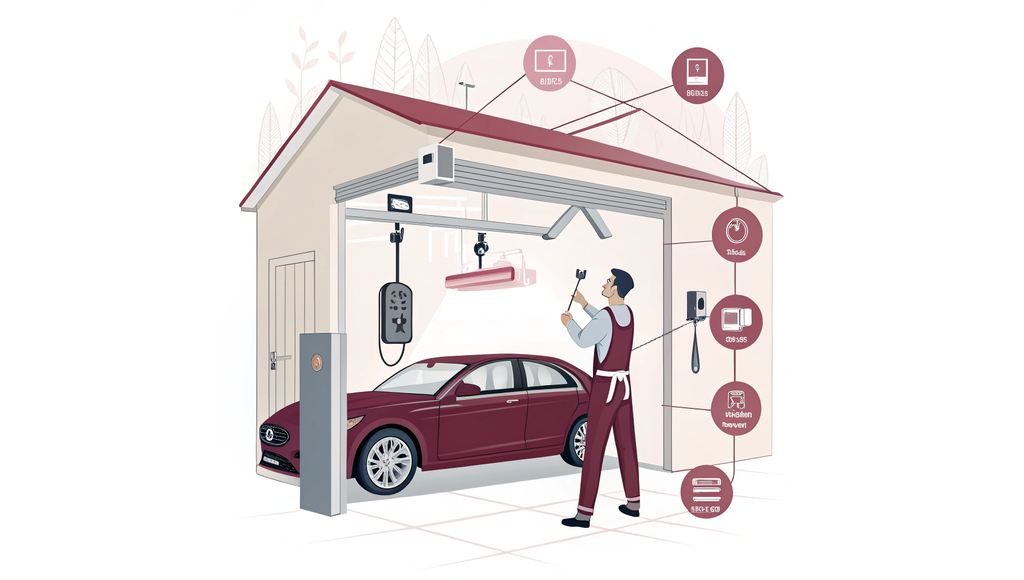
Then there are the smaller components that add up faster than you'd think. New weather stripping, hardware, springs, cables, and safety sensors might seem minor, but they can easily add $150 to $300 to your invoice. Some contractors include these in their base quote, others itemize them separately. Always ask what's included so you're comparing apples to apples.
Size and Configuration Impact
Your garage door size affects cost in ways that aren't always linear. You might assume a two-car garage door costs exactly twice what a single-car door costs, but that's rarely the case.
Single-car doors typically measure 8 to 9 feet wide and 7 to 8 feet tall. These are the most common size, which means materials are readily available and installers can work efficiently. You're looking at $600 to $1,500 total for a basic installation in this category.
Two-car garage doors usually run 16 feet wide, and this is where things get interesting. The wider span requires heavier-duty springs, sturdier tracks, and often a more powerful opener if you're replacing that too. A standard two-car door installation typically runs $800 to $2,000, but that can climb significantly if you go with premium materials.
Reality Check: Custom sizes cost more than standard dimensions, sometimes 20 to 40 percent more, because the door has to be specially manufactured rather than pulled from existing inventory.
If you have an oversized garage for an RV or workshop, or you need a custom height for a lifted truck, expect to pay premium prices. These installations often require engineered solutions for proper balance and safety, and the materials aren't sitting in warehouses waiting to ship.
Material Choices and Their Cost Implications
The material you choose does more than affect appearance. It fundamentally changes both your upfront cost and your long-term ownership experience.
Steel doors dominate the market because they offer the best value proposition for most people. An uninsulated steel door starts around $300, while an insulated model with a woodgrain texture might run $800 to $1,200. They're low maintenance, reasonably durable, and available in dozens of styles. The downside is they dent when hit, and cheaper versions can look obviously cheap.
Wood doors cost significantly more, usually starting around $1,200 and climbing to $4,000 or more for custom carriage-house styles. They're gorgeous, no question, but they need regular painting or staining, and they're susceptible to warping in humid climates. If curb appeal is your priority and you're willing to do the maintenance, wood delivers.
Composite and faux-wood options have gotten much better in recent years. These typically cost 10 to 25 percent more than comparable steel doors but offer wood's aesthetic without the maintenance headaches. They're worth considering if you like the look of wood but don't want to commit to the upkeep schedule.
Aluminum and glass doors are popular for modern or commercial-style homes. The see-through panels create a sleek look, but you're paying $2,500 to $5,000 for this aesthetic. They also offer zero insulation unless you opt for frosted or insulated panels, which pushes the price even higher.
Insulation and Energy Efficiency Considerations
Here's where things get interesting for your wallet, both short-term and long-term. Insulation adds $200 to $600 to your upfront cost, but it can pay dividends if your garage is attached to your house or you use the space as a workshop.
Garage door insulation is rated by R-value, which measures thermal resistance. An uninsulated door has an R-value near zero. Basic polystyrene insulation gets you to R-4 or R-6, while premium polyurethane insulation can reach R-16 to R-18. Each step up costs more but provides better temperature control and noise reduction.
If your garage shares a wall with your living space, insulation becomes more important. The temperature difference can affect your heating and cooling costs by 10 to 20 percent in extreme climates. Run the math on your energy bills to see if the upfront investment makes sense. In moderate climates, the noise reduction might be the bigger benefit than energy savings.
One thing people don't always consider is that insulated doors are also stronger and more durable. The insulation adds rigidity, making the door less likely to bend or dent from impacts. If you have kids playing basketball near the garage or you're prone to accidentally bumping the door with your car, this extra durability might justify the cost on its own.
Installation Complexity Factors
This is where quotes start to diverge significantly, because every garage has its quirks. What looks like a simple installation to you might reveal complications once the old door comes down.
If your existing framing is solid, the tracks are in good shape, and you're installing a door with similar dimensions and weight, you're looking at a straightforward job. Most installers can complete this in 3 to 5 hours, and labor costs stay reasonable.
But if your garage was built in the 1970s with a non-standard opening size, or if the previous door was installed incorrectly and damaged the framing, you're entering custom territory. The installer might need to reframe the opening, install additional support, or completely rebuild the track system. These modifications can add $300 to $1,000 to your labor costs.
Headroom and sideroom requirements also affect installation difficulty. Standard garage doors need about 12 inches of headroom above the opening and 3.5 inches of sideroom on each side for the tracks. If your garage doesn't have this clearance, you'll need special low-headroom or reduced-sideroom hardware, which costs more and takes longer to install.
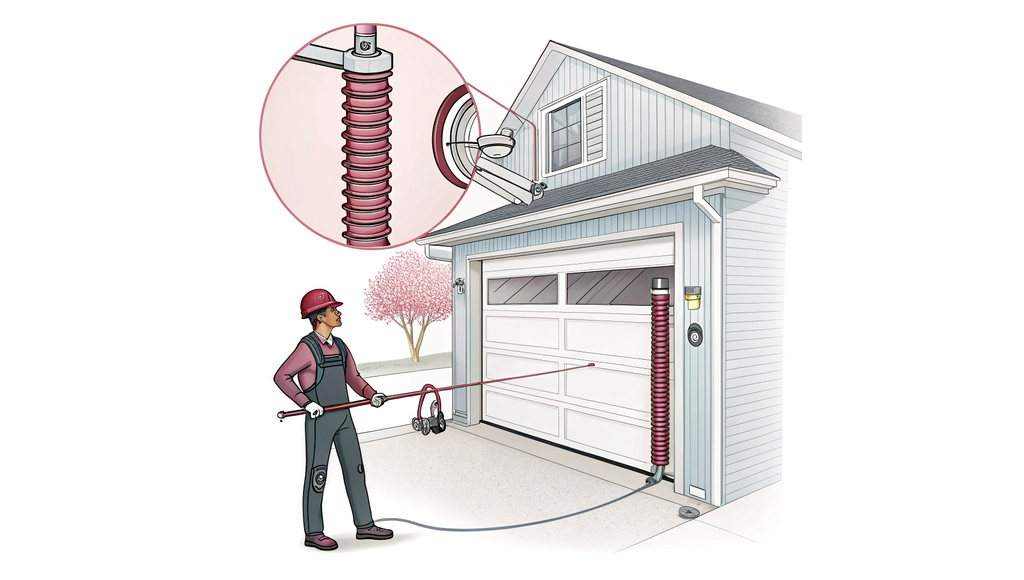
The door weight and spring system complexity matters too. Heavier doors require stronger torsion springs, which are under tremendous tension and require specialized tools and expertise to install safely. If your installer quotes extra for heavy-duty spring installation, that's not padding the bill, that's acknowledging the additional skill and risk involved.
Regional Price Variations
Where you live affects installation costs more than you might expect. Labor rates vary significantly by region, and material costs can fluctuate based on local availability and transportation expenses.
In major metropolitan areas like New York, San Francisco, or Washington DC, labor rates run 30 to 50 percent higher than in rural or suburban markets. A job that costs $1,200 in Kansas might easily run $1,800 in Boston for identical materials and work. This isn't price gouging, it reflects local cost of living, licensing requirements, and market competition.
Weather and building codes also play a role. If you live in a hurricane-prone area, you might need wind-rated doors and reinforced hardware that adds $400 to $800 to your project. Similarly, areas with extreme cold might require premium insulation and weather sealing that temperate regions can skip.
Permit requirements vary by municipality too. Some areas require permits for garage door installation, which adds $50 to $200 in fees plus the time for inspections. Ask your installer whether permits are needed in your area and who handles obtaining them.
Cost Comparison Table
| Door Type | Single Car | Double Car | Material Cost | Labor Range | Total Estimate |
|---|---|---|---|---|---|
| Basic Steel Uninsulated | 8x7 ft | 16x7 ft | $300-$600 | $200-$400 | $600-$1,200 |
| Steel Insulated | 9x7 ft | 16x7 ft | $600-$1,200 | $300-$500 | $1,000-$1,800 |
| Wood Overlay | 9x7 ft | 16x7 ft | $1,000-$1,800 | $400-$600 | $1,500-$2,600 |
| Custom Wood | 9x8 ft | 16x8 ft | $2,000-$4,000 | $500-$800 | $2,700-$5,000 |
| Aluminum/Glass | 8x7 ft | 16x7 ft | $1,800-$3,500 | $400-$700 | $2,400-$4,500 |
Getting Accurate Quotes
Now that you understand the variables, you can approach the quote process strategically. The goal is to get comparable estimates that reflect your actual needs, not just a door price.
When you contact installers, provide specific details about your current setup. Measure your existing door width and height, note what material it is, and mention any issues you've noticed with the tracks or framing. Photos help tremendously. The more information you provide upfront, the more accurate the initial estimate will be.
Ask for itemized quotes that break out material costs, labor, additional hardware, and any potential complications. A single lump-sum number tells you nothing about where your money is going or what flexibility you might have. If one contractor quotes $2,200 and another quotes $1,600, an itemized breakdown shows you exactly what accounts for the difference.
Get at least three quotes, but don't automatically go with the lowest number. The cheapest bid sometimes means cut corners, lower-quality materials, or a contractor who's underestimated the job and will hit you with change orders later. Look for the quote that seems most thorough and realistic, not just the lowest number.
Ask about warranties on both materials and labor. A quality door should have at least a 5-year warranty on the material, and good installers stand behind their work for at least a year. If someone's offering a premium price, they should be providing premium guarantees to match.
Smart Move: Schedule estimates within the same week so you're comparing prices in the same market conditions. Material costs can shift, and promotional pricing changes, so quotes spread over a month might not be truly comparable.
Timing and Seasonal Considerations
When you schedule your installation affects both availability and sometimes pricing. Garage door companies have busy and slow seasons just like any other trade.
Spring and fall are peak seasons because the weather is cooperative and people are tackling home improvement projects. If you need installation during these times, expect longer lead times and potentially less flexibility on pricing. Summer can be busy too, especially in moderate climates where people take advantage of good weather.
Winter is often the slow season, particularly in colder regions where homeowners aren't thinking about garage projects. Some installers offer discounts during slow periods to keep their crews working. If your door isn't urgently broken and you can wait for an off-season installation, you might save 10 to 15 percent.
That said, if your door is broken and your garage is unusable, waiting for a better season isn't realistic. Emergency installations sometimes carry premium pricing, but most reputable companies keep their emergency rates reasonable because they understand you don't have much choice.
Action Items
- Start by measuring your existing garage door opening and determining what material and insulation level you want. Take photos of your current setup from multiple angles, including the interior track system and the area above the door.
- Research installers in your area through review platforms and verify they're licensed and insured. Schedule at least three in-person estimates within the same week, and ask each contractor to provide itemized quotes.
- Compare the quotes not just on total price but on what's included, warranty terms, and timeline. Check references from recent installations, especially if you're considering a premium door or dealing with a complex installation situation.
- Once you've selected an installer, confirm all details in writing before work begins, including the specific door model, all included components, labor scope, timeline, and payment terms. Taking these steps puts you in control of the process and helps ensure you get fair value for your investment.