
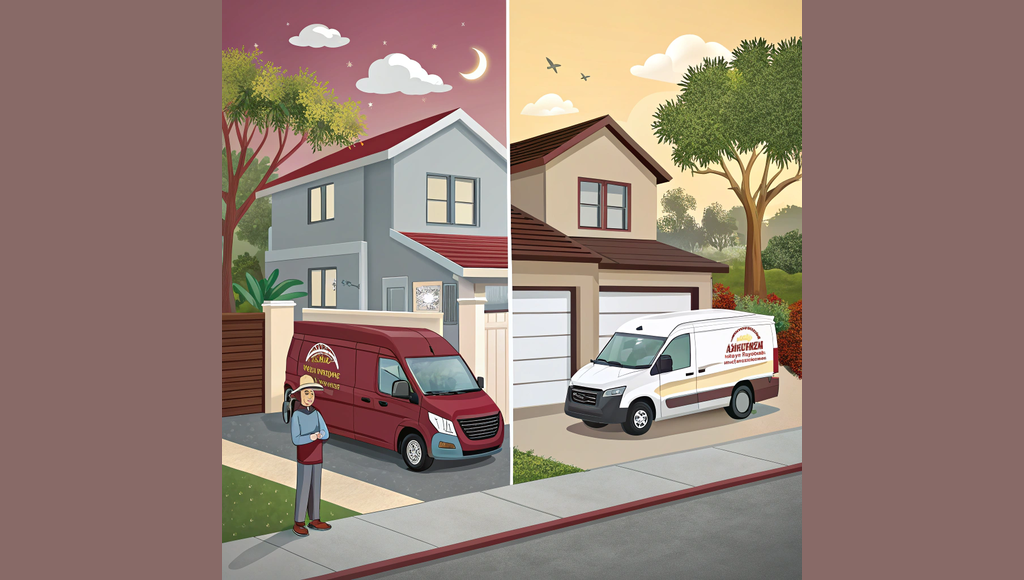
You've got two estimates sitting on your kitchen counter. One from a local garage door company that's been in your area for fifteen years. Another from a national franchise you've seen advertised. The prices are nearly identical. Now what?
This decision isn't about one type being universally better than the other. Local independents and national franchises both include excellent companies and mediocre ones. What matters is understanding how these business models actually differ and which advantages align with your specific situation. We'll walk through the real operational differences, where each type excels, and how to make the right choice for your garage door needs.
Reality Check: The business model matters less than the individual company's quality. A well-run local shop beats a poorly managed franchise every time, and vice versa. Focus on contractor selection fundamentals regardless of whether you're considering local or national providers.
What actually separates local from national providers
Local garage door companies are independently owned operations typically serving a single city or county. They usually employ between 1 and 25 people, generate annual revenues from $100,000 to $5 million, and answer to no corporate office. The owner often works alongside their crews and makes all business decisions.
National franchises like Overhead Door, A1 Garage, or Precision Door operate under branded systems with standardized procedures across multiple locations. Individual franchise owners pay royalties and advertising fees (typically 5-8% combined) to the parent company in exchange for brand recognition, training programs, and operational systems. These operations usually employ 25 or more people and generate $5 million to $20 million annually across their territories.
The key operational difference shows up in decision-making authority. Local owners can approve warranty extensions, price adjustments, or custom solutions on the spot. Franchise operators often need to follow corporate policies and approval processes. When you need someone to verify credentials and insurance, both types should provide documentation readily, but their organizational structures differ significantly.
Where local companies have the edge
Local independents live and work in your community. Their reputation depends entirely on word-of-mouth within a tight geographic area, which creates powerful incentive for quality service. They can't afford to burn bridges because every unhappy customer directly impacts their livelihood. This often translates to more personalized attention and genuine relationship building.
Decision-making flexibility gives locals another advantage. The owner can adjust pricing for seniors, offer payment plans for unexpected repairs, or customize solutions without checking with a regional manager. Last week, a local contractor in Portland waived their trip fee for an elderly customer who needed a second visit because the first technician misdiagnosed a sensor issue. A franchise might require manager approval for that kind of exception.
Lower overhead often means competitive pricing. Without franchise fees, national advertising contributions, or corporate profit margins, local companies can sometimes offer better value. They dominate the residential market, capturing about 68% of service calls for single-family homes.
Pro Tip: Local companies typically excel at emergency response because they're not coordinating schedules across multiple territories. When your spring breaks at 7 AM and you need same-day service, a local provider can often rearrange their route more easily.
| Factor | Local Independent | National Franchise |
|---|---|---|
| Response to unique requests | High flexibility | Policy-dependent |
| Community accountability | Lives in service area | Franchisee may live elsewhere |
| Pricing structure | Owner sets all rates | Corporate pricing guidelines |
| Relationship continuity | Same owner long-term | Franchise can change hands |
Where franchises deliver advantages
Standardized training programs give franchises an edge in technical consistency. Corporate headquarters often mandates certification courses, safety protocols, and quality standards across all locations. Technicians receive formal instruction on specific manufacturer systems and access to ongoing education programs that many independents can't afford to provide.
Corporate backing provides resources that matter during complex projects. Franchises typically maintain larger parts inventories, specialized equipment for commercial installations, and relationships with multiple manufacturers. When you need a custom-sized commercial door installed at your business, franchises often have the procurement systems and technical expertise to handle specifications that might challenge smaller operators.
Multi-location coverage helps if you own properties in different areas or plan to relocate. Your service history follows you within the franchise network. The scheduling systems, customer relationship software, and documentation practices also tend to be more sophisticated. These companies excel in the commercial sector, where they're growing at about 7.7% annually.
Authorized dealer relationships give franchise operations another advantage. Manufacturers like LiftMaster or Clopay often require specific certifications and volume commitments before granting preferred dealer status, which franchises can meet more easily than individual shops.
Key Fact: National franchises typically invest more in technology integration. Their scheduling apps, automated follow-up systems, and digital documentation often surpass what local independents offer, which matters if you value seamless digital communication.
Making the right choice for your situation
Your specific needs should drive this decision more than abstract preferences. Emergency repairs on residential doors typically favor local companies with flexible scheduling and fast response times. Complex commercial installations or projects requiring specialized manufacturer knowledge often benefit from franchise resources and training depth.
Watch for red flags that apply to both types. Lack of insurance, pressure tactics, or refusal to provide references disqualifies a company regardless of their business model. Similarly, strong reviews across multiple platforms matter whether you're evaluating a local shop or franchise location.
Consider these scenarios when deciding. Choose local independents when you value personalized relationships, need flexible service terms, want to support community businesses, or have a straightforward residential repair. Lean toward franchises when you need manufacturer-specific expertise, prefer corporate accountability structures, manage commercial properties, or require multi-location service consistency.
| Your Situation | Better Fit | Why It Matters |
|---|---|---|
| Emergency residential repair | Usually local | Faster scheduling flexibility |
| Commercial door installation | Often franchise | Specialized equipment and training |
| Ongoing maintenance relationship | Either works | Individual company quality determines experience |
| Custom or unusual project | Depends on complexity | Local for creative solutions, franchise for technical specs |
When you're comparing quotes from multiple companies, evaluate both types using the same criteria. Check licensing and insurance status. Review their ratings across Google, BBB, and Angi. Ask about warranty coverage and parts sourcing. Request and verify references. The company that scores highest on these factors deserves your business, whether they're a local independent or a national franchise.
The technician who arrives at your door matters more than the name on their truck. A well-trained, honest professional from a quality company will serve you better than a mediocre technician from either business model. Focus on verifying the specific company's track record, communication practices, and commitment to transparency rather than making assumptions based on their franchise status or local independence.
FAQs
Are national garage door franchises more expensive than local companies?
Not necessarily. Franchises pay royalty fees (typically 5-8% of revenue), but they also benefit from bulk purchasing power that can lower parts costs. Local companies have less overhead but smaller buying power. Pricing depends more on the individual company's business model and market positioning than whether they're local or franchise. Compare quotes from both types using the same criteria to find the best value.
Do franchise technicians receive better training than local company employees?
Franchises typically offer more standardized training programs with mandatory certifications and ongoing education funded by corporate headquarters. However, many experienced local owners provide excellent hands-on training and have decades of expertise. The individual technician's experience and certifications matter more than the business model. Ask any company about their technicians' specific certifications and manufacturer training regardless of franchise status.
Which responds faster to garage door emergencies, local or national companies?
Local independents often respond faster because they operate in a smaller service area and can adjust schedules more flexibly. The owner can personally prioritize emergency calls without corporate approval. Franchises may coordinate across larger territories with more structured scheduling systems. For true emergencies like broken springs or doors stuck open, local companies typically offer same-day service more readily.
Will a local garage door company still be around in five years to honor warranties?
Established local companies with 10-plus years in business often have excellent longevity because they've proven their market viability. Franchises offer corporate backing but individual franchise locations can change ownership or close. Check how long the specific company has operated locally, review their financial stability indicators, and verify they offer manufacturer warranties in addition to workmanship guarantees regardless of business type.