
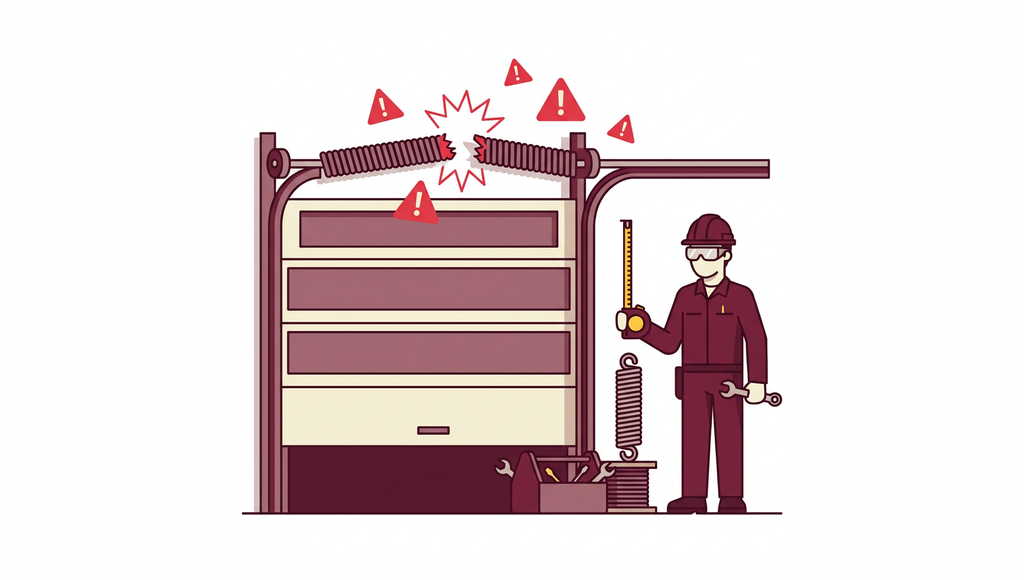
Garage door spring replacement costs $150-$350 professionally in 2026. Learn exact pricing by spring type, why DIY risks serious injury, and how to find qualified contractors who do the job safely.
Your garage door spring just broke, and you're staring at quotes that seem high compared to the $30 spring you found online. Here's the reality. Professional spring replacement runs $150 to $350 for a standard residential door, with most homeowners paying around $250. That feels expensive when DIY parts cost $30 to $100, but there's a reason every industry expert says the same thing: attempting this repair yourself can land you in the emergency room.
The price gap exists because you're not just paying for the spring. You're paying for specialized tools, years of training, liability insurance, and someone who knows how to handle components storing 150 to 200 pounds of tension without losing fingers. This guide breaks down exactly where your money goes, what factors push costs higher, and how to find contractors who charge fairly without cutting safety corners.
Safety Note: Emergency rooms treat garage door spring injuries every week. Most involve severe hand lacerations or blunt force trauma when springs release unexpectedly during amateur installation attempts.
Before committing to any repair, understanding the broader context helps. Our garage door repair guide covers when spring replacement makes sense versus other repair options, but when springs fail, replacement isn't optional. Your door won't function safely until you address it.
What you'll actually pay for spring replacement
The national average sits at $250 per spring for professional installation. Your actual cost depends on spring type, door configuration, and local labor rates. Torsion springs, the horizontal coils mounted above your door opening, typically cost $200 to $300 installed. Extension springs, which run along the tracks on either side, come in slightly cheaper at $150 to $250.
Breaking down a typical quote reveals where the money goes. The spring itself costs $30 to $100 depending on quality and cycle rating. Labor runs $75 to $150 per hour, with most jobs taking one to two hours. Service call fees add another $75 to $100, though many contractors bundle this into flat-rate pricing.
| Spring Type | Parts Cost | Labor Cost | Total Range |
|---|---|---|---|
| Torsion (single) | $75-$150 | $125-$200 | $200-$350 |
| Extension (single) | $50-$100 | $100-$150 | $150-$250 |
| Both torsion springs | $150-$300 | $150-$250 | $300-$550 |
Geographic location significantly affects pricing. High cost-of-living metros like California or New York see hourly rates hitting $100 to $150, while moderate markets stick closer to $75 to $100. Getting quotes from two or three local contractors quickly establishes what's normal for your area.
The single versus double spring decision matters financially. Most residential doors use two springs working together. If one breaks, the other is likely near failure since they've handled identical stress. Replacing both during the same service visit typically costs $300 to $400 total, saving you the second service call fee when the other spring fails three months later. For detailed analysis of spring type differences, check our torsion vs extension spring cost comparison.
Hidden costs that inflate your final bill
The quote you receive over the phone rarely matches what you pay after service. Emergency calls placed outside business hours automatically add $50 to $100 in surcharges. Weekend or holiday service can tack on another $50 to $150. These premiums aren't scams, they compensate technicians for off-hours availability, but they're avoidable if your situation isn't truly urgent.
Cable replacement catches many homeowners off guard. When springs fail, the attached cables often show wear requiring concurrent replacement. That adds $50 to $100 to your bill. Drum replacement, if the spring broke violently and damaged the drum mechanism, brings similar costs. Disposal fees for old steel springs run around $20, small but rarely mentioned upfront.
| Hidden Fee | Typical Cost | When It Applies |
|---|---|---|
| After-hours emergency | $50-$100 | Nights, weekends, holidays |
| Cable replacement | $50-$100 | Cables show fraying or damage |
| High-cycle upgrade | Varies | Choosing premium 25,000+ cycle springs |
| Disposal fee | ~$20 | Standard on most jobs |
| Additional hardware | $30-$75 | Rollers, hinges needing replacement |
Request flat-rate quotes that include all standard fees. Legitimate contractors will visit your home, inspect the door, and provide written estimates covering parts, labor, service calls, and typical add-ons. Be suspicious of phone quotes lacking detail. Every garage door setup differs, and honest technicians can't diagnose sight-unseen.
Cost-Saving Tip: Replacing both springs together costs only $75 to $150 more than replacing one, but saves you a second service call fee when the remaining spring fails. Most contractors discount the second spring labor if done simultaneously.
Why professionals say never attempt DIY
Torsion springs operate under 150 to 200 pounds of constant tension, sometimes more on heavy wood or insulated doors. When you attempt installation without proper training and tools, that energy releases in milliseconds if something slips. The spring can eject across your garage with enough force to break bones, cause severe lacerations, or worse.
The injuries aren't hypothetical. Hospitals across the country treat these cases regularly. Common injuries include severed fingers when hands slip while winding the spring, facial trauma when springs release toward the installer, and deep tissue damage when springs snap mid-installation. The winding bars professionals use cost $40, but knowing the exact winding technique, securing methods, and spring tension calculations takes years of experience.
Your $120 to $250 savings by going DIY evaporates the moment something goes wrong. Beyond personal injury, amateur installations frequently damage the door, opener mechanism, or tracks, turning a $250 repair into an $800 problem. Professional contractors carry liability insurance protecting you if their work causes damage. Your homeowner's policy probably won't cover injuries from work you're not qualified to perform.
Extension springs present different but equally serious hazards. Without proper safety cables and securing techniques, a snapped extension spring can whip across the garage, striking anyone nearby. The tools required, the safety protocols, and the physical strength needed to handle these components safely all justify professional service.
If you're comfortable with basic maintenance, stick to tasks genuinely appropriate for DIY. Sensor alignment, lubrication, and weatherstripping replacement are perfectly safe. Spring work isn't, regardless of how confident the YouTube video makes it seem.
Finding qualified contractors and avoiding scams
Start by requesting quotes from two or three local companies. This establishes pricing norms in your market and helps identify outliers charging significantly above or below average. Extremely low quotes often signal cut corners through inferior springs, uninsured technicians, or bait-and-switch tactics where the final bill mysteriously doubles.
Verify credentials before anyone touches your door. Ask for proof of general liability insurance and workers compensation coverage. If a technician gets injured on your property and the company lacks workers comp, you're potentially liable. Confirm licensing where required, though requirements vary by state. Check their Better Business Bureau rating and recent Google reviews, looking for patterns in how they handle problems.
Red flags include unwillingness to provide written estimates, pressure to pay cash without documentation, evasiveness about insurance or licensing, and quotes that seem unrealistically cheap. Legitimate companies explain their warranty policies clearly, typically offering at least one year on labor and matching manufacturer warranties on parts.
Ask specific questions during the quote process. What spring cycle rating are you installing? Does the estimate include both springs or just the broken one? Are service call and disposal fees included or separate? What's your typical timeline for scheduling? Companies confident in their service answer directly without dodging. For a comprehensive list of contractor vetting questions, see our guide on essential questions before hiring a garage door company.
Flat-rate pricing eliminates uncertainty better than hourly estimates. When a contractor quotes "$225 includes everything," you know your exact cost upfront. Hourly billing leaves room for jobs extending beyond initial estimates, though it's sometimes appropriate for complex repairs requiring diagnostic time.
Timeline Expectation: Standard spring replacement takes one to two hours including door balance adjustment and safety testing. If a contractor suggests significantly longer, ask why. Complex commercial doors or unusual configurations justify extra time, but residential jobs follow predictable timelines.
Making the smart decision
Professional spring replacement at $200 to $250 represents necessary investment rather than optional expense. The modest cost difference between DIY parts and professional service disappears when you factor in injury risk, liability concerns, and the probability of damaging your door through improper installation.
When you receive quotes this week, remember that the middle-range estimate from a well-reviewed, properly insured contractor typically delivers the best value. The cheapest quote often becomes expensive when corners cut during installation lead to callbacks or additional repairs. The highest quote might include unnecessary upgrades you didn't request.
Replace both springs together even if only one broke. The remaining spring handled identical stress and sits near end-of-life. Paying $75 extra now beats scheduling another service call in three months when the second spring fails at 6 AM on a workday morning.
FAQs
How much does garage door spring replacement cost in 2026?
Professional garage door spring replacement costs between $150 and $350 for a single spring, with most homeowners paying around $250. Torsion springs typically run $200 to $300 installed, while extension springs cost $150 to $250. If you replace both springs simultaneously, expect to pay $300 to $550 total. Geographic location affects pricing significantly, with high cost-of-living areas charging 25% to 50% more than moderate markets.
Is it safe to replace garage door springs yourself?
No, DIY garage door spring replacement is extremely dangerous and not recommended. Torsion springs operate under 150 to 200 pounds of constant tension. Without proper training, tools, and technique, springs can release violently causing severe lacerations, broken bones, or amputations. Emergency rooms regularly treat these injuries. The $120 to $250 savings isn't worth the serious injury risk or potential property damage from improper installation.
Should I replace one garage door spring or both?
Replace both springs together even if only one broke. The remaining spring handled identical stress and sits near failure. Replacing both during one service visit costs only $75 to $150 more than replacing one spring but saves you a second service call fee when the other spring fails within months. Most contractors offer discounted labor when replacing both simultaneously.
What hidden fees increase garage door spring replacement costs?
Common hidden fees include emergency or after-hours surcharges adding $50 to $100, weekend or holiday premiums of $50 to $150, cable replacement at $50 to $100 if cables show wear, and disposal fees around $20. Request flat-rate written estimates that include all standard fees before work begins. Avoid contractors who provide vague phone quotes without inspecting your specific door configuration.