
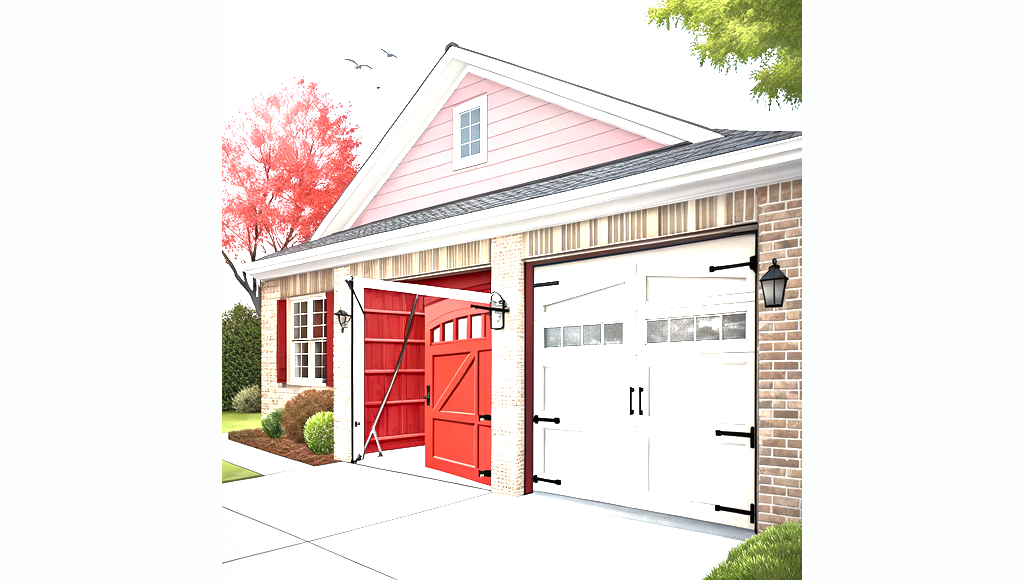
Your garage door has two dented panels from that unfortunate backing-up incident last month. One contractor quotes you $500 to swap them out. Another says you should replace the entire door for $2,000. Now you're stuck wondering which recommendation makes sense and whether someone's trying to upsell you.
The truth is, neither option is automatically right. Panel replacement saves money upfront but comes with risks most homeowners don't discover until it's too late. Full replacement costs more initially but often proves cheaper over time. The right choice depends on your door's age, the extent of damage, and whether you can actually match those panels after years of sun exposure.
Did You Know? Garage doors fade noticeably after just five years of UV exposure. New panels on a seven-year-old door often stand out like a fresh paint patch on a sun-bleached car, no matter how "exact" the match claims to be.
This guide breaks down the real costs, shows you when each option makes financial sense, and reveals the hidden factors that can turn a smart repair into an expensive mistake. You'll find the same practical decision framework professionals use when making repair versus replacement recommendations.
What you'll actually pay for each option
Panel replacement typically runs $250 to $860 for a single section on a standard double-car door, while full replacement averages $1,200 to $6,000 depending on material and features. That's a significant difference, which explains why panel replacement seems appealing at first glance.
The numbers shift based on what you're working with. Steel non-insulated panels cost less to replace ($250-$860 single panel, $1,720-$2,580 for multiple panels) compared to wood or composite sections ($778-$1,500 per panel, $2,838-$4,000 for several). Full steel door installation ranges from $750 to $3,500 depending on insulation level, while wood doors jump to $2,500-$10,000 for complete replacement.
| Scope | Steel Non-Insulated | Steel Insulated | Wood/Composite |
|---|---|---|---|
| Single Panel | $250-$860 | $400-$900 | $778-$1,500 |
| 2-3 Panels | $1,720-$2,580 | $2,000-$3,000 | $2,838-$4,000 |
| Full Single-Car Door | $750-$2,000 | $1,000-$3,500 | $2,500-$5,000 |
| Full Double-Car Door | $1,200-$2,000 | $1,800-$3,500 | $4,000-$10,000+ |
Labor adds $95 to $252 for single panel jobs (taking 1-2 hours) versus $300 to $1,200 for full replacement (requiring 6-12 hours including disposal and setup). High-cost areas like California or New York add 20-50% to these baseline figures, while Midwest and Southern markets run 10-20% lower.
When panel replacement actually works
Panel replacement makes sense under specific conditions. Your door needs to be less than 10 years old, you're replacing only one or two sections, and your manufacturer still produces exact-match panels. Steel doors offer your best shot at successful matching since they're standardized and widely available.
The math works when the door's mechanical components remain solid. If your springs, tracks, cables, and opener all function properly, replacing damaged panels extends your door's life by five to 10 years. Single-dent repairs succeed about 80% of the time when the door is relatively new and the damage is isolated.
Pro Tip: Before getting repair quotes, call your door manufacturer directly to confirm they still produce your exact panel style and color. This five-minute call can save you from discovering halfway through the job that matching panels don't exist anymore.
Material matters significantly. Common steel panel styles from major manufacturers (Amarr, Clopay, Wayne Dalton) typically match well within the first five years. Wood panels rarely match successfully after three years due to grain variations and weathering. Aluminum and glass sections often can't be replaced individually at all, requiring full door replacement regardless of damage scope.
The hidden costs that change the math
The biggest surprise for most homeowners is the matching problem. UV exposure fades your door's finish, creating color shifts that make even "identical" new panels obvious. After five to seven years, seamless blending becomes nearly impossible. This aesthetic mismatch affects curb appeal enough that 70% of homeowner decisions get influenced by appearance concerns.
Mechanical issues lurk beneath the surface. Your springs cycle through about 10,000 operations before needing replacement. If your door is 10 years old and you replace panels now, those springs will likely fail within two years anyway. Adding $200-$400 for spring work suddenly makes that $500 panel repair cost $700-$900, narrowing the gap with full replacement.
Warranty complications add another layer. Mixing old and new components often voids manufacturer coverage, leaving you unprotected if problems develop. Full replacements include 10-20 year warranties on all components, providing long-term protection panel repairs can't match. Energy efficiency suffers too, as older doors lose 10-20% more heat than modern insulated models, costing you $100-$200 annually in wasted energy.
The break-even threshold matters more than initial sticker shock. When repair costs exceed 50% of a new door's price, replacement makes better financial sense. If you're looking at $3,560 for multiple panel replacements but could install a new insulated steel door for $2,000, the choice becomes obvious. Properties also see value impacts, with mismatched repairs deducting 1-2% from home value while uniform new doors add 1-3%. For a $300,000 home, that's a potential $12,000 swing.
Making the right choice for your situation
Door age provides your clearest decision signal. Below 10 years old with isolated damage, panel replacement usually works. Between 10-15 years, carefully evaluate total repair costs against replacement pricing. Beyond 15 years, replacement almost always proves smarter since you're addressing the entire aging system at once.
Consider the cascading failure pattern. About 60% of doors over 15 years old that need panel work require full replacement within two years anyway as other components fail. You end up paying for the panel repair plus a full door, spending more total than if you'd replaced everything initially. This pattern shows up constantly in real repair histories.
Budget constraints are legitimate, but factor in true costs. That cheaper panel repair makes sense if it's genuinely a short-term fix on a door you're planning to replace in a year or two anyway. For long-term solutions, spending an extra $800 now to get 20 years of service beats spending less for a repair that lasts three years.
Full replacement opens upgrade opportunities panel repair can't match. Modern doors offer smart opener integration ($300 add-on), improved insulation (R-12 to R-18 efficiency), enhanced security features, and fresh aesthetics that boost curb appeal. If you've been tolerating noisy operation or poor weather sealing, replacement solves multiple problems simultaneously.
Get three written estimates from different contractors before deciding. Quality professionals will assess your door's overall condition, not just the damaged panels, and provide honest guidance about whether repair makes sense. Look for contractors through vetted directories that aggregate ratings from Google, BBB, and Angi to ensure you're getting reliable advice rather than a sales pitch. The right choice depends on your specific door, damage extent, and long-term plans, but armed with these cost comparisons and decision criteria, you can confidently choose the option that makes financial sense for your situation.
FAQs
How much does replacing one garage door panel cost compared to a full door?
A single panel replacement typically costs $250 to $860 depending on material, while full door replacement ranges from $1,200 to $6,000. Steel panels are cheapest at $250-$860, while wood panels run $778-$1,500 each. Labor adds $95-$252 for panel work versus $300-$1,200 for complete installation. The cost gap narrows when replacing multiple panels or adding necessary spring and hardware repairs.
Can you match garage door panels on a 10-year-old door?
Matching panels on doors older than 5-7 years is extremely difficult due to UV fading. Even "identical" new panels often stand out noticeably against weathered sections. Steel doors offer better matching success than wood within the first five years. Before proceeding, contact your manufacturer directly to confirm they still produce your exact panel style, as discontinued models can't be matched at all.
When does full garage door replacement make more sense than panel repair?
Replace the entire door when it's over 15 years old, repair costs exceed 50% of new door price, or you're replacing 3+ panels. About 60% of doors over 15 years needing panel work require full replacement within two years as springs, tracks, and other components fail. If your door has mechanical issues, fading problems, or outdated features, full replacement solves everything simultaneously.
What hidden costs should I consider with garage door panel replacement?
Panel replacement often triggers additional expenses like spring replacement ($200-$400) on aging systems, since 10-year-old springs typically fail within two years. Mixing old and new parts usually voids warranties. Energy losses from older doors cost $100-$200 annually extra. Mismatched panel appearance can reduce home value by 1-2%, while new doors increase value by 1-3% on typical properties.