
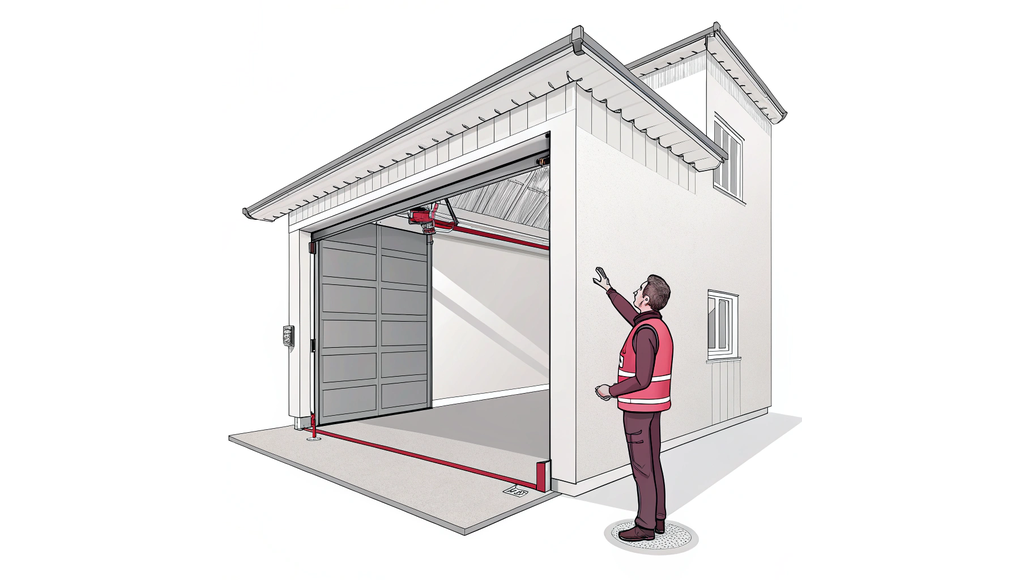
Finding your garage door hanging crooked or completely jammed because it's jumped off the track ranks among the most stressful home emergencies. You can't get your car out, the opening to your home sits exposed, and you're not sure if touching anything will make it worse. An off-track garage door happens when the rollers (those small wheels on the door's edge) slip out of the metal channels that guide the door's movement. This creates an immediate safety hazard since you now have 150 to 400 pounds of door supported incorrectly or not at all.
This guide walks you through exactly what to do the moment you discover the problem, how to identify what caused it, whether you can safely fix it yourself, and what professional repair actually costs. While some garage door issues fall into DIY territory, off-track repairs typically require professional help due to the serious injury risks involved. For broader context on garage door problems and repairs, check out our complete garage door repair guide.
Safety Note: A single-car garage door weighs 150-200 pounds, while double doors reach 300-400 pounds. When off track, this weight becomes unpredictable and dangerous. Never position yourself under or directly beside an off-track door.
What to do the moment you discover the problem
Stop using your garage door immediately. Don't press the remote again, don't try forcing it manually, and don't attempt to "jiggle it back into place." Every additional movement risks turning a repairable situation into panel damage or personal injury. If the door is connected to your opener, pull the red emergency release cord to disconnect the motor. This prevents the opener from trying to move a jammed door and burning out its motor.
Clear the area around your garage. Keep family members and pets away from the door until a professional secures it. Take photos of the visible damage from a safe distance. These help your insurance claim if needed and give repair companies a head start on diagnosing the problem over the phone.
Assess whether you're facing an emergency or next-day situation. If your door is stuck partway open with your car trapped inside and you need to get to work, that's emergency territory. If the door is fully closed and securing your home, you can usually wait for regular business hours and save the emergency service fee. Either way, contact a qualified professional rather than attempting repairs yourself. Our emergency garage door repair guide can help you determine your urgency level and what to communicate to technicians.
Identifying what caused your door to derail
Garage doors don't randomly jump off track. Something failed, and understanding what helps prevent it from happening again. The most common culprit is worn or broken rollers. These small wheels take thousands of cycles of stress, and after 5 to 10 years of regular use, the nylon or steel wears down. Once a roller breaks or deteriorates enough, it slips sideways out of the track instead of rolling smoothly along it.
Bent tracks rank second among causes. This typically happens from vehicle impacts (backing into the track with your car), foundation settling that shifts the track alignment, or even someone leaning something heavy against the track. You can often spot bent tracks by looking for visible gaps between the track and rollers or sections where the track curves unnaturally.
Broken or loose cables create the kind of sudden imbalance that yanks rollers out of position. Your garage door uses cables to help distribute weight evenly as it opens and closes. When one snaps or loosens, the door becomes lopsided, putting extreme sideways pressure on rollers until they pop free. If you notice frayed cables alongside your off-track problem, that's likely your root cause. For detailed information on addressing cable issues, see our guide on broken garage door cable repair.
The realistic difficulty of DIY repair
Let's be direct about this. Off-track garage door repair is not a safe DIY project for most homeowners. You're dealing with a massively heavy door that's currently in an unstable position. The process requires physically lifting and holding this weight while realigning or replacing components, and if something slips, you're looking at crushed fingers, damaged property, or worse.
Professional technicians use specialized clamps, bracing equipment, and two-person teams specifically because controlling this weight safely requires proper tools and experience. Your standard homeowner toolbox doesn't include garage door vise grips or the winding bars needed for spring-related issues that often accompany track problems.
The only scenario where an experienced DIYer might attempt this involves a very minor roller slip with no visible damage, where the door is fully closed and secured, and you have heavy-duty C-clamps, proper gloves, and a second person helping. Even then, you're taking a calculated risk. The average person attempting this repair faces about a 20% chance of making the problem worse or getting hurt, based on service call data from botched DIY attempts.
Did You Know: Professional garage door technicians undergo specialized training specifically for safely handling off-track repairs. The techniques for securing and lifting these doors aren't intuitive and can't be learned from a YouTube video.
Professional repair costs $150 to $350 for most off-track situations, completed in one to two hours. That's far cheaper than an emergency room visit, time lost from work, or the $800+ you'll spend if amateur repair attempts damage door panels. When you're dealing with this much weight and complexity, professional help delivers better value and eliminates risk.
What professional repair involves and realistic costs
A qualified technician starts by thoroughly assessing the damage to determine whether you need realignment, part replacement, or both. They'll check roller condition, measure track alignment, test cable tension, and look for the underlying cause. The actual repair process involves securing the door with proper clamps, manually lifting sections to take pressure off affected areas, realigning or replacing rollers, straightening or replacing damaged track sections, and testing the complete system for balance and safety.
Simple realignment where rollers slipped but nothing broke takes 45 to 90 minutes and typically costs $150 to $250. This assumes the technician can reset the rollers and make minor track adjustments without replacing parts. More commonly, you're looking at roller replacement combined with track work, running $200 to $350 and taking 1.5 to 2.5 hours. Extensive repairs involving cable replacement, major track damage, or bent door panels can push costs to $400 or more.
| Repair Type | Typical Cost | Time Required |
|---|---|---|
| Simple realignment (no parts) | $150-$250 | 45-90 minutes |
| Roller replacement + realignment | $200-$300 | 1-2 hours |
| Track replacement (one side) | $250-$350 | 1.5-2 hours |
| Extensive repair (multiple issues) | $350-$500+ | 2-4 hours |
Geographic location affects pricing, with coastal and high-humidity areas like Houston seeing 10-25% higher costs due to accelerated corrosion issues. Door size matters too. A single-car door costs less to repair than a double-car model simply because there are fewer rollers and shorter track sections.
Smart homeowners bundle related services during the repair visit. If your technician is already there fixing the track, having them replace aging rollers, lubricate all moving parts, and check balance adds minimal labor cost but prevents future problems. For detailed cost breakdowns and regional variations, see our off track repair pricing guide.
Money Saver: Bundling a complete tune-up with your off-track repair typically adds just $50-75 to your bill but can prevent the next emergency. Technicians report this approach cuts repeat service calls by nearly half.
Regular track maintenance prevents most off-track problems before they start. Monthly visual inspections catch bent sections, worn rollers, and loose hardware early when fixes are simple and cheap. Quarterly lubrication keeps rollers moving smoothly and reduces wear. Our garage door track maintenance guide provides a practical schedule you can actually follow without spending your whole weekend on garage tasks.
When you need repair work, finding a qualified professional makes all the difference between a quick fix and a recurring headache. Look for technicians with proper licensing, insurance coverage, and consistent positive reviews across multiple platforms. Garage Door Handbook connects you with thoroughly vetted local professionals who meet these standards, giving you confidence that your off-track emergency gets handled safely and correctly the first time.
Your off-track garage door feels like a crisis right now, but with proper professional repair and attention to the underlying cause, you'll have your door back to smooth operation quickly. The key is resisting the urge to force a DIY fix on a genuinely dangerous repair, investing in quality work that addresses root causes rather than just symptoms, and implementing basic preventive maintenance to avoid a repeat performance.
FAQs
Can I fix a garage door that came off track by myself?
No, most homeowners shouldn't attempt this repair. You're dealing with 150-400 pounds of unstable weight that requires specialized clamps and bracing equipment. Without proper tools and training, you risk serious injury or making the damage worse. Professional repair costs $150-$350 and eliminates the safety risks entirely.
How much does it cost to fix a garage door off track?
Simple realignment without parts costs $150-$250 and takes about an hour. Most repairs involve roller replacement and track adjustments, running $200-$350. Extensive damage with cable or panel issues can reach $400-$500. Geographic location and door size affect pricing, with coastal areas typically 10-25% higher.
What causes a garage door to jump off the track?
Worn or broken rollers are the most common cause after years of regular use. Other culprits include bent tracks from vehicle impacts, broken or loose cables creating imbalance, and foundation settling that shifts track alignment. Identifying the root cause prevents the problem from recurring after repair.
What should I do immediately when my garage door comes off track?
Stop using the door immediately and disconnect the opener by pulling the emergency release cord. Keep people and pets away from the area. Don't try forcing the door or attempting DIY repairs. Take photos of the damage and contact a qualified professional for same-day or emergency service.