
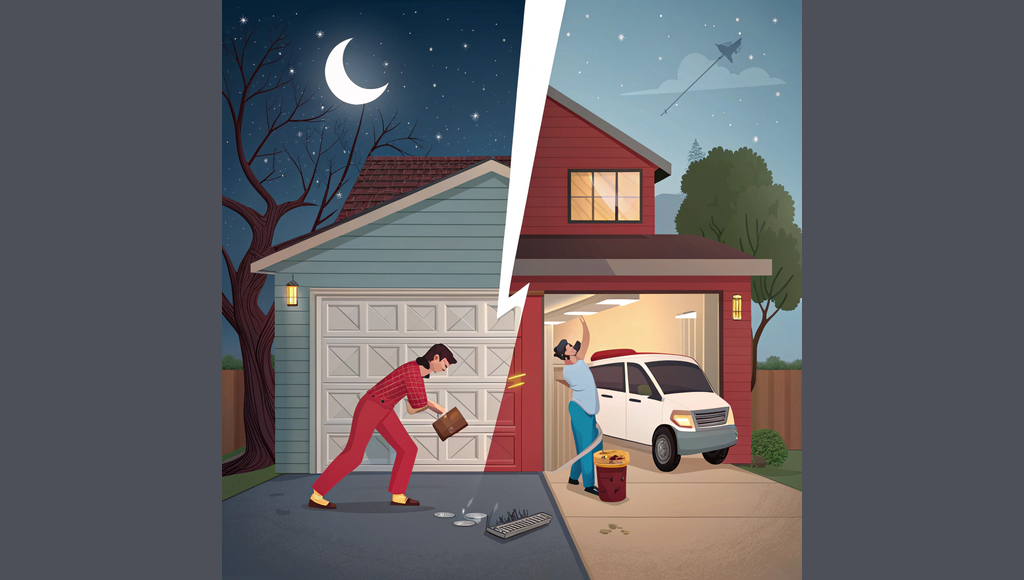
Your garage door spring just snapped with a loud bang, or maybe your door won't close and you're leaving for work in twenty minutes. Now you're staring at your phone wondering whether to call an emergency service or schedule something for next week. The difference between these choices affects your wallet, your safety, and how quickly you get back to normal.
The decision comes down to three factors: whether you face an immediate safety or security risk, how much you're willing to pay for speed, and what happens if the problem gets worse while you wait. Understanding when emergency service makes sense versus when scheduled service is smarter saves you from both unnecessary premiums and costly damage escalation.
Safety Note: A garage door stuck halfway open, completely off its tracks, or with broken springs under tension requires immediate professional attention. These situations pose serious injury risks if you attempt repairs yourself or ignore them.
Choosing the right contractor matters even more during emergencies when you're under time pressure. Let's break down exactly when you need emergency service and when you can safely schedule ahead.
When your garage door problem can't wait
True emergencies involve immediate safety hazards, security vulnerabilities, or situations that completely prevent you from using your vehicle. If your door is stuck fully open and you can't secure your home, that's an emergency regardless of the time. A broken spring that left your door halfway up creates both a security risk and a potential injury hazard if the door suddenly drops.
Similarly, a door that's completely off its tracks needs immediate attention because the instability could cause the door to fall. If your opener failed and trapped your car inside when you need to get somewhere critical, or if broken cables left your door in a dangerous position, you're looking at emergency territory.
| Situation | Emergency Service | Scheduled Service |
|---|---|---|
| Door stuck open, can't secure home | ✓ | |
| Broken spring, door won't move | ✓ | |
| Door off track, unstable | ✓ | |
| Noisy operation, still functional | ✓ | |
| Slow closing, works properly | ✓ | |
| Routine maintenance needed | ✓ |
Non-emergency situations include doors that still operate but make noise, move slowly, or show signs of wear. If your garage door won't close completely but you can secure it manually, you likely have time to schedule during business hours.
Key Fact: Unaddressed garage door failures contribute to 48% of home security breaches through garages, making genuinely urgent repairs worth the premium cost.
How emergency service pricing actually works
Emergency garage door service typically costs 20-50% more than scheduled repairs for the same work. That premium covers after-hours labor rates, immediate dispatch that reroutes technicians from other jobs, and rush ordering of parts that might otherwise take a day or two to arrive.
A spring replacement that costs $225 during business hours might run $300-350 as an emergency call. Most companies also add dispatch fees between $75-150 for emergency service, though some waive this if you proceed with the repair. These surcharges aren't arbitrary, they reflect real costs of maintaining 24/7 availability and prioritizing your job over scheduled work.
| Repair Type | Scheduled Cost | Emergency Cost | Premium Added |
|---|---|---|---|
| Spring replacement | $150-$350 | $200-$550 | $50-$200 |
| Opener repair | $150-$400 | $225-$600 | $75-$200 |
| Cable replacement | $100-$250 | $150-$400 | $50-$150 |
| Track realignment | $125-$300 | $175-$450 | $50-$150 |
The emergency premium makes sense when you're facing genuine security risks or can't access your vehicle. It doesn't make sense for routine issues that can wait. Understanding whether same-day service is worth it depends on your specific situation and risk tolerance.
The hidden costs of waiting
Delaying repairs sometimes costs more than emergency service would have. A slightly bent track that seems minor can worsen with each door cycle, eventually causing rollers to bind or the door to jam completely. What started as a $175 track adjustment becomes a $450 repair when the damaged track destroys your rollers and bends additional sections.
Security vulnerabilities create risks beyond repair costs. A door that won't fully close invites break-ins, and your homeowner's insurance might deny claims if you knowingly left your garage accessible. Weather exposure through gaps in a malfunctioning door can damage stored items or impact your home's energy efficiency if the garage shares walls with living spaces.
The inconvenience factor has real costs too. If you can't access your car and need rideshare services or rental vehicles for several days while waiting for a scheduled appointment, those expenses quickly exceed the emergency service premium. Similarly, taking time off work to be home during specific appointment windows has an opportunity cost.
Real Example: A homeowner in Phoenix ignored a loose cable for two weeks to save money on emergency service. The cable snapped, causing the door to crash down and damage three panels. The delayed repair cost $1,200 versus the $275 emergency cable replacement would have cost initially.
Making the right call for your situation
Start by honestly assessing three questions. First, can you secure your home and vehicles right now? If not, you need emergency service. Second, does the problem pose safety risks like an unstable door or exposed springs under tension? That's also emergency territory. Third, will waiting potentially cause additional damage to the door system? If yes, faster service prevents costlier repairs.
For situations that don't meet those criteria, scheduled service makes financial sense. A door that operates but sounds terrible can wait for a maintenance appointment. Noisy garage door issues rarely worsen overnight. Similarly, if you need weather stripping replacement or routine maintenance, scheduling during business hours saves you 30-50% compared to emergency rates.
When you do need emergency service, use directories like Garage Door Handbook that aggregate ratings from multiple sources. Time pressure makes you vulnerable to whoever answers first, but you still need quality work. Look for contractors with consistent ratings across Google, BBB, and industry platforms. Before anyone starts work, ask the right questions about pricing, warranties, and credentials.
For scheduled service, get three quotes and compare not just prices but what's included. Read reviews carefully and watch for red flags like pressure tactics or reluctance to provide written estimates.
The right choice depends on your specific circumstances. Emergency service protects you from safety hazards and prevents damage escalation when facing genuine urgency. Scheduled service optimizes costs and allows thorough contractor vetting when you have time. Both approaches work when matched to appropriate situations, and using vetted contractor directories helps ensure quality regardless of which path you choose.
FAQs
How much more does emergency garage door service cost compared to scheduled service?
Emergency garage door service typically costs 20-50% more than scheduled repairs. You'll pay higher labor rates plus dispatch fees ranging from $75-150. For example, a spring replacement costing $225 during business hours might run $300-350 as an emergency call. The premium covers after-hours availability, immediate dispatch, and rush parts ordering. This surcharge makes sense for genuine security risks but not for routine issues that can wait.
What qualifies as a true garage door emergency versus something that can wait?
True emergencies involve immediate safety hazards or security vulnerabilities. This includes doors stuck fully open that leave your home unsecured, broken springs making the door inoperable, doors completely off their tracks, or failed openers trapping your car inside. Situations that can wait include noisy operation while still functional, slow closing that works properly, or routine maintenance needs. If you can secure your home and the door isn't unstable, scheduled service usually works fine.
Can waiting for scheduled service instead of emergency repair cause more damage?
Yes, delaying certain repairs often costs more than emergency service would have. A slightly bent track can worsen with each door cycle, turning a $175 adjustment into a $450 repair when damaged tracks destroy rollers. Loose cables can snap completely, causing doors to crash and damage panels. Security gaps from malfunctioning doors also invite break-ins and potential insurance claim denials. Genuine mechanical failures usually justify immediate repair to prevent escalation.
How quickly can emergency garage door technicians typically arrive?
Most emergency garage door services aim for 1-4 hour response times, though this varies by location and time of day. Many companies offer same-day service for urgent calls during business hours and within a few hours for true after-hours emergencies. Response times depend on technician availability in your area and current call volume. When calling, ask specifically about their estimated arrival time rather than accepting vague promises of quick service.