
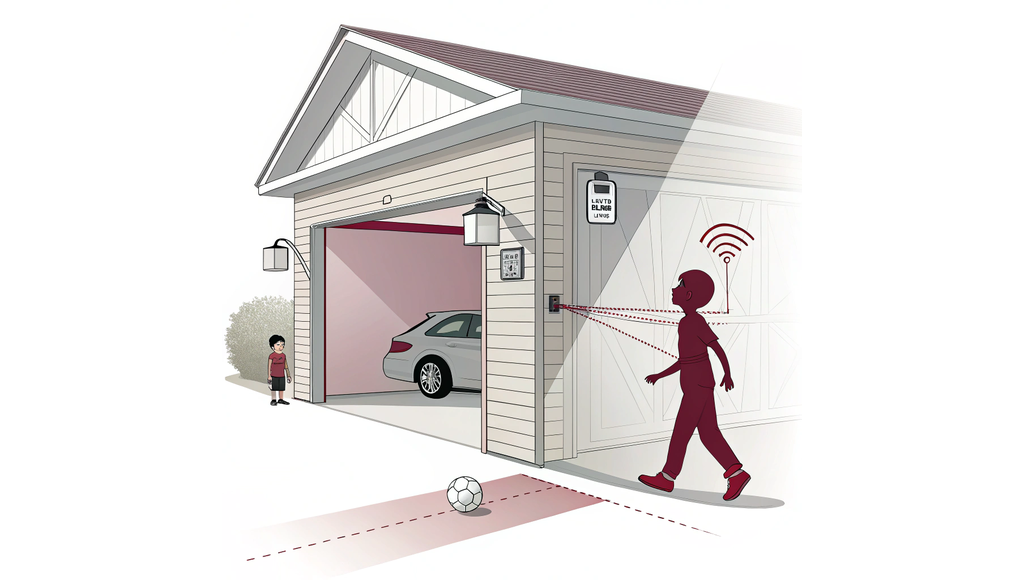
Your garage door weighs somewhere between 130 and 350 pounds depending on the size and material. It moves up and down thousands of times per year, often with children and pets nearby. The Consumer Product Safety Commission recorded 20,700 garage door injuries treated in emergency rooms over just a three-year period, and 90% of those injuries involved children under 15 years old.
Here's what catches most homeowners off guard. Many assume their garage door automatically has proper safety features just because it's relatively new. The truth is more complicated. Doors installed before 1993 lack federally mandated safety mechanisms, and even newer doors only protect you if those features are properly maintained and tested. Understanding what safety features your door should have and how to verify they work correctly can prevent serious injuries and give you genuine peace of mind.
This guide walks you through the mandatory safety features every modern garage door must include, shows you exactly how to test them, helps you evaluate whether an older door needs upgrades, and explains additional safety options worth considering. Whether you're concerned about child safety, preparing for emergencies, or just want to confirm your door meets current standards, you'll find clear answers grounded in actual safety requirements and real-world testing procedures. For broader context about garage door systems and repairs, check out our complete garage door repair guide.
Did You Know? Properly installed and aligned photoelectric sensors prevent 100% of entrapment injuries. The catch is that 95% of entrapment risks come from sensors that have shifted out of alignment over time.
Mandatory safety features on modern garage doors
Federal safety standards established in 1993 require specific protective mechanisms on all garage door openers sold in the United States. If your opener was manufactured after January 1993, it must include photoelectric sensors and an auto-reverse mechanism. These aren't optional upgrades or premium features. They're legal requirements designed to prevent the exact injuries that sent thousands of people to emergency rooms in the years before these standards existed.
Photoelectric sensors, often called photo-eye sensors, consist of two units mounted on each side of your garage door opening about six inches from the floor. One sends an invisible infrared beam across the opening, and the other receives it. If anything breaks that beam while the door is closing, the door immediately reverses direction. You'll find these sensors connected by thin wires running to your opener unit. For detailed troubleshooting when sensors cause closing problems, see our guide on garage door sensor alignment.
The auto-reverse mechanism provides mechanical backup protection. It monitors the force your opener applies as the door closes. If the door encounters resistance above the 15-pound federal limit, it stops and reverses. This catches situations where sensors might be blocked, misaligned, or malfunctioning.
Your door also includes a manual release mechanism, usually a red cord hanging from the opener trolley. This disconnects the door from the motor so you can operate it manually during power outages or emergencies. The placement must be accessible but high enough that young children can't reach it during normal operation.
| Safety Feature | Required Since | Primary Function | Backup Protection |
|---|---|---|---|
| Photo-eye sensors | 1993 | Detects obstructions in door path | Auto-reverse mechanism |
| Auto-reverse (force limit) | 1993 | Stops/reverses on resistance over 15 lbs | Manual operation option |
| Manual release | Always required | Allows emergency manual operation | Physical door disconnection |
Testing your safety features the right way
Having safety features installed means nothing if they're not functioning correctly. Sensors drift out of alignment from vibrations and bumps. Auto-reverse sensitivity degrades over time. The manual release mechanism gets overlooked until you desperately need it during a power outage at 6 AM.
Start with your photo-eye sensors. Place a solid object like a cardboard box or basketball in the door's path and press your remote to close the door. The door should stop and reverse the moment it contacts the object. If it continues closing or only reverses after applying significant force, your sensors aren't working properly. Check that both sensor lights are illuminated and that nothing is blocking the beam path. Small shifts in sensor position create alignment issues that compromise safety.
Test the auto-reverse mechanism separately using a two-by-four board laid flat on the ground where the door closes. The door should reverse within two seconds of contacting the board. Never use your hand or foot for this test. If the door crushes the board or takes more than two seconds to reverse, the force settings need professional adjustment. For opener-specific troubleshooting, visit our garage door opener troubleshooting guide.
Safety Note: If your door fails either the sensor test or the auto-reverse test, stop using the automatic opener immediately. Operate the door manually using the release cord until a professional can repair the safety systems.
Locate your manual release handle and pull it while the door is fully closed. The trolley should disconnect with moderate effort, allowing you to lift the door manually. Make sure everyone in your household knows where this release is and how to use it. The critical warning here is to never pull the release while the door is open unless you can physically hold the door's weight, as a broken spring will cause the door to slam down violently.
Safety features for older garage doors
Garage doors installed before 1993 operate under completely different safety standards. Many have no sensors at all. Some include basic auto-reverse mechanisms that measure resistance poorly or have degraded over decades of use. If you bought a home built in the 1980s or early 1990s and the garage door is original, you're probably missing the safety features that prevent injuries.
Retrofitting modern safety features to an older door is absolutely possible and significantly less expensive than you might expect. A new garage door opener with integrated sensors, auto-reverse, and smart features typically costs between $400 and $600 installed. This completely replaces your old opener system and brings you into full compliance with current safety standards. The sensors mount easily to most door frames regardless of age.
Sometimes the math pushes you toward full door replacement instead of just upgrading the opener. If your door itself is 20-plus years old, the panels may be deteriorating, the insulation is likely minimal, and the overall mechanism has wear that causes other problems. When you're facing a $500 opener upgrade on a door that also needs $600 in spring and panel repairs, spending $1,800 on a complete modern door replacement makes more financial sense. Our garage door spring replacement guide helps you evaluate when cumulative repairs justify replacement.
Pro Tip: Homeowners insurance increasingly scrutinize garage door safety compliance. Some insurers reduce premiums for doors meeting current safety standards or may question coverage after an injury involving a non-compliant door.
The liability question matters more than many homeowners realize. If a child is injured by your garage door and investigation reveals you lacked basic safety features mandated for three decades, you're in a difficult legal position. Upgrading isn't just about protecting your family. It's about meeting the reasonable standard of care any homeowner should maintain.
Additional safety features worth considering
Beyond the federally mandated minimums, several safety enhancements provide extra protection layers. Battery backup systems ensure your garage door operates during power outages. California made these mandatory in 2019 for new installations because people were trapped in garages during wildfire evacuations when the power failed. Even if you don't live in California, a battery backup prevents the vulnerability of being unable to access your vehicle during emergencies.
Modern smart garage door systems add safety through monitoring capabilities. You receive immediate alerts on your phone if your door opens unexpectedly. You can verify whether you closed the door after leaving home without driving back to check. Some systems include integrated cameras showing you exactly what triggered a sensor reversal. The real-time visibility helps you distinguish between legitimate safety reversals and false alarms from debris in the sensor path.
Pinch-proof panel design, introduced in the early 2000s, reduces finger injuries by 80% according to industry data. Traditional garage door panels create pinch points where sections meet. Pinch-proof designs use curved joints and recessed seams that prevent fingers from getting caught. If you have young children who play near the garage, this design feature matters significantly.
Enhanced sensor technology goes beyond basic obstacle detection. Some advanced systems monitor for carbon monoxide and smoke within the garage, automatically alerting homeowners to hazardous conditions. Others use multiple detection points along the door's path rather than just the floor-level beam. For comprehensive safety maintenance beyond just features, review our garage door maintenance schedule to keep all systems functioning correctly.
Rolling code technology addresses security rather than physical safety but deserves mention in any safety discussion. Older garage door remotes transmit the same code every time you press the button. Code-grabbing devices can capture and duplicate this signal. Rolling code systems change the access code with every use, making unauthorized duplication essentially impossible. Most openers manufactured after 1996 include this feature, but if you're upgrading from a very old system, verify its inclusion.
Protecting your family starts with testing
You now understand what safety features your garage door should include and how to verify they're functioning correctly. The mandatory protections, photoelectric sensors and auto-reverse mechanisms, prevent the vast majority of injuries when properly maintained. Testing these features monthly takes less than five minutes and catches problems before they cause accidents.
If you discovered your door lacks modern safety features or failed your testing checks, schedule repairs or upgrades this week rather than next month. The statistics are clear. Over 1,600 garage door injuries occur annually in the United States, and 90% involve children under 15. Professional installation of safety-compliant openers costs far less than a single emergency room visit, and the peace of mind is worth considerably more.
When selecting a professional to install or repair safety features, prioritize companies that emphasize safety compliance and perform thorough testing as part of their service. Our guide on questions to ask before hiring a garage door company helps you identify contractors who take safety seriously rather than just rushing through installations. Your garage door should protect your family, not endanger them. Verify your safety features work correctly, and upgrade systems that fall short of current standards.
FAQs
How often should I test my garage door safety sensors?
Test your photoelectric sensors monthly by placing an object in the door's path while closing. The door should immediately stop and reverse. Also test the auto-reverse mechanism monthly using a two-by-four board laid flat on the ground. If either test fails, stop using the automatic opener and call a professional for repairs before resuming normal operation.
What safety features are required by law on garage doors?
Federal standards since 1993 require all garage door openers to include photoelectric sensors that detect obstructions and an auto-reverse mechanism that stops and reverses when encountering more than 15 pounds of resistance. Every door must also have a manual release handle for emergency operation during power outages. Doors installed before 1993 lack these mandatory protections.
Should I upgrade my old garage door's safety features?
Absolutely upgrade doors installed before 1993, as they lack federally mandated safety sensors and proper auto-reverse mechanisms. A new opener with complete safety features costs $400 to $600 installed. If your door also needs spring or panel repairs, full door replacement may cost less overall than piecemeal fixes on an aging system that lacks modern protections.
What additional garage door safety features protect children?
Beyond mandatory sensors and auto-reverse, consider pinch-proof panel design that reduces finger injuries by 80% through curved joints that eliminate pinch points. Smart monitoring systems alert you to unexpected door openings. Battery backup prevents entrapment during power failures. Wall-mounted controls should be at least five feet high, keeping them out of young children's reach.