
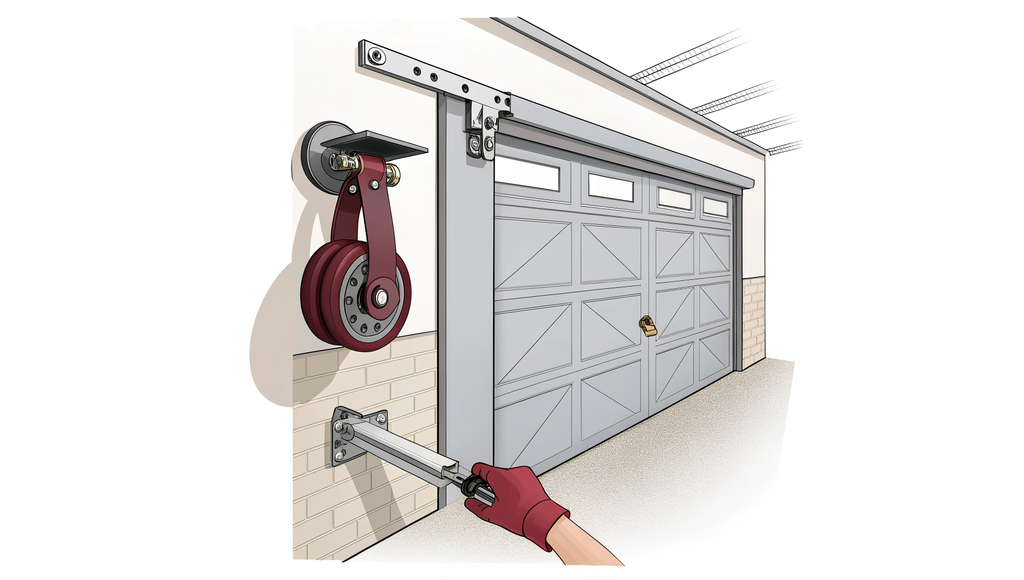
That grinding, scraping noise every time your garage door opens? That's usually worn rollers, and here's the good news. Unlike spring replacement, which absolutely requires a professional, roller replacement sits comfortably in DIY territory for most mechanically-inclined homeowners. You'll spend $50 to $150 on materials and invest 2 to 4 hours of your time, compared to $200 to $350 for professional service.
The process involves working on one roller at a time while keeping the door secured, which means you're never dealing with the full weight or tension of the system. This guide walks you through exactly what you need, the safety steps that aren't optional, the replacement procedure itself, and the mistakes that trip up first-timers. By the end, you'll know whether this project makes sense for your situation or if you should get professional quotes instead. For a broader look at garage door repairs, check out our complete repair guide.
Safety Note: Roller replacement is safe for DIYers because you're not touching springs, cables, or bottom brackets. Those components are under extreme tension and cause serious injuries. If your project requires messing with any of those, stop and call a professional.
What you need before you start
Your local hardware store carries everything required for this project. On the tools side, grab heavy-duty vice grips (you need two), a flathead screwdriver, Phillips head screwdriver, adjustable wrench, and a sturdy 6-foot ladder. Safety glasses and work gloves protect against metal shavings and sharp edges you'll encounter on older rollers.
For materials, you're buying replacement rollers that match your door configuration. Most residential doors use 8 to 10 rollers total. Roller packs typically include the mounting hardware you need, so don't buy extras unless your hinges are damaged. You'll also want garage door lubricant (silicone-based, not WD-40) and a wire brush if your tracks show rust.
Choosing the right roller type matters more than you'd think. Steel rollers run $3 to $5 each but create more noise. Nylon-coated rollers cost $5 to $8 each and operate much quieter. Ball bearing rollers represent the premium option at $8 to $12 each, offering the smoothest operation and longest lifespan. If noise bothers you or your garage shares a wall with living space, nylon or ball bearing rollers justify the small price difference. Still not sure what's causing your door noise? Our noisy garage door troubleshooting guide helps you confirm rollers are actually the problem.
Safety steps you can't skip
Start by disconnecting power to your garage door opener at the wall switch or breaker. This prevents accidental activation while you're working inside the track system, which could cause serious injury. Never skip this step, even if you think you won't bump the wall button.
Next, secure the door with vice grips clamped onto the track just below the bottom roller on both sides. This double-lock approach prevents the door from sliding down if something shifts during your work. Test that the grips hold by gently trying to move the door manually. If it budges, reposition the grips with a firmer clamp.
Work on exactly one roller and hinge assembly at a time. Removing multiple hinges simultaneously destabilizes the door structure and can cause panels to separate or bind. Mark each hinge position with a felt pen before removal so you reinstall everything at the correct seam between panels. Misaligned hinges cause the door to bind and wear unevenly.
Here's what stays off-limits during roller replacement. Don't touch the bottom brackets where cables attach. Don't adjust or loosen springs. Don't disconnect cables. These components operate under hundreds of pounds of tension. If your bottom rollers need replacement and you can't access them without disturbing cables or brackets, that's when you need professional help. Our spring replacement safety guide explains why spring work is categorically different from roller work.
Pro Tip: Take photos of your door's hinge configuration before starting. These reference images prevent confusion during reassembly, especially if you're interrupted mid-project.
Step-by-step replacement process
Begin with a single hinge-based roller, typically starting with one of the middle rollers rather than top or bottom. Remove all fasteners securing the hinge to the door panel using your screwdriver or wrench. Keep these fasteners organized because you'll reuse them unless they're stripped or damaged.
Tilt the hinge and roller assembly toward you, angling it so the roller wheel can slide out of the garage door track. You might need to wiggle it slightly. Once free from the track, slide the roller rod completely out of the hinge assembly. Inspect the old roller for the wear pattern. If it's cracked, wobbling, or the wheel is visibly flattened on one side, you've confirmed these needed replacement.
Before installing the new roller, apply a thin coat of garage door lubricant to the roller itself. Some rollers have directional arrows indicating which end points up, so check for markings. Insert the new roller rod into the hinge assembly, then angle the entire unit toward the garage interior to guide the roller wheel back into the track. Position the hinge precisely at the seam between door panels using your felt pen reference marks.
Secure the hinge with its fasteners, but only tighten to about 90% of full torque initially. Move systematically to the next roller and repeat this exact process. After you've replaced all accessible rollers, manually raise and lower the door a few times while it's still disconnected from the opener. This settling allows you to identify any binding before final tightening. Only then should you fully torque all fasteners and restore opener power. If you notice the tracks need cleaning during this process, our track maintenance guide covers proper cleaning techniques.
Common mistakes that cost you time and money
The biggest error is removing multiple hinges at once. It's tempting to speed things up, but this destabilizes the door and makes realignment nearly impossible without help. Panels can separate, the door can twist in the tracks, and you'll spend an hour fixing what should have taken 15 minutes. Work on one roller at a time without exception.
Over-tightening hardware ranks as the second most common failure. When you repeatedly remove and reinstall fasteners, there's a tendency to crank them down hard. Excessive torque actually causes fasteners to loosen over time as vibration cycles relax the over-stressed connection. It also deforms hinge metal, preventing proper roller seating. Tighten in stages and let the door settle between adjustments.
Skipping the lubrication step before installation seems minor but cuts roller lifespan significantly. Apply lubricant to the new roller before you insert it into the track, not after. This ensures even coating distribution. Similarly, neglecting to clean tracks before installing new rollers means your fresh components immediately start grinding through years of accumulated dirt and rust. A five-minute cleaning with a wire brush prevents premature wear.
Watch for directional markings on your new rollers. Some models specify installation orientation with small arrows indicating which end points up. Installing them backward creates uneven wear and reduces load distribution across the bearing surface. If the door operation feels rough after replacement or you notice it pulling to one side, double-check roller orientation and hinge alignment. Our garage door balance guide helps troubleshoot post-installation issues.
Time Saver: Don't fully tighten any fasteners until you've replaced all rollers and tested door movement. This staged approach lets you make minor position adjustments before locking everything in place.
Making the right call for your situation
Roller replacement delivers real value when you're comfortable with basic mechanical work and your door is otherwise functioning normally. The 2 to 4 hour time investment saves you $150 to $200 in labor costs, and you gain familiarity with your door system for future maintenance. Most homeowners find the process straightforward once they work through the first roller and establish a rhythm.
That said, some situations call for professional service from the start. If your door is off the tracks, if you see frayed cables, if springs show gaps or rust, or if bottom rollers require cable disconnection, those scenarios involve safety risks beyond basic roller replacement. Similarly, if multiple mechanical issues exist simultaneously (worn rollers plus bent tracks plus balance problems), a comprehensive professional assessment makes more sense than piecemeal DIY attempts.
For detailed cost breakdowns comparing DIY materials to professional service pricing, see our roller replacement pricing guide. When you do need professional help, get at least three written estimates and verify each company's licensing and insurance before making a decision.
FAQs
How long does it take to replace garage door rollers yourself?
Plan for 2 to 4 hours to replace all rollers on a standard residential garage door. Your first roller takes the longest as you learn the process, but you'll develop a rhythm afterward. Working carefully without rushing prevents mistakes that add time. If you're only replacing a few particularly worn rollers instead of the complete set, expect 1 to 2 hours total.
Can I replace garage door rollers without professional help?
Yes, roller replacement is safe for DIY if you follow proper safety protocols. Unlike spring work, you're not dealing with dangerous tension when replacing rollers. The key is working on one roller at a time while keeping the door secured with vice grips. However, if accessing rollers requires touching cables, bottom brackets, or springs, call a professional instead.
Should I choose steel or nylon garage door rollers?
Nylon-coated or ball bearing rollers are worth the small price difference over basic steel. Steel rollers cost $3 to $5 each but create significant noise. Nylon-coated rollers run $5 to $8 each and operate much quieter. Ball bearing rollers at $8 to $12 each offer the smoothest, longest-lasting performance. If your garage shares walls with living spaces, skip steel entirely.
What tools do I need to replace garage door rollers?
You'll need two heavy-duty vice grips, flathead and Phillips screwdrivers, an adjustable wrench, and a 6-foot ladder. Safety glasses and work gloves protect against metal shavings. For materials, buy replacement rollers matching your door configuration (typically 8 to 10 total), silicone-based garage door lubricant, and a wire brush if tracks show rust or buildup.