
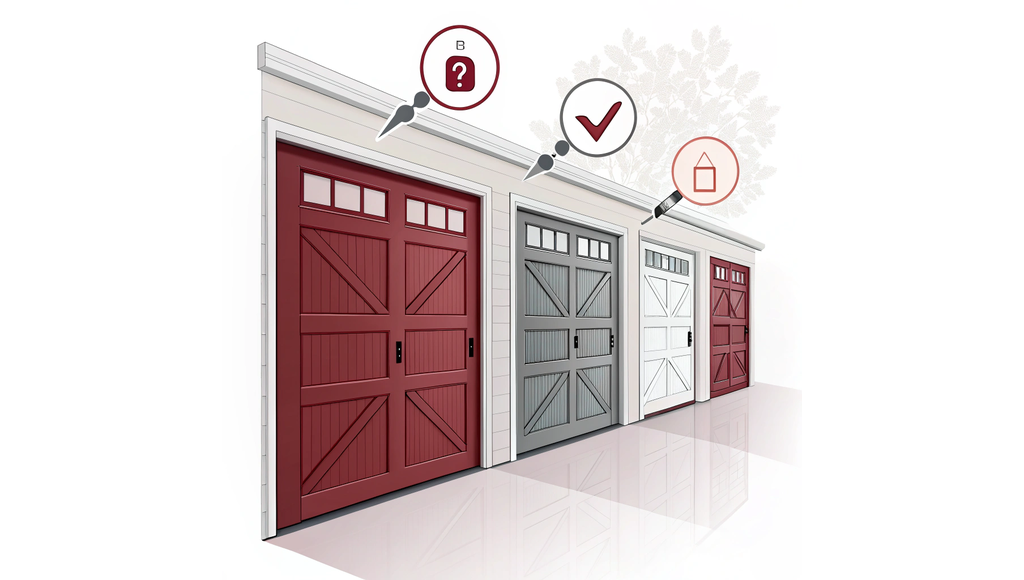
Getting 3-5 garage door quotes takes just a few hours but typically saves homeowners 15-25% on repairs and replacements. Learn exactly what to compare beyond price, how to spot red flags, and which factors matter most when choosing between competing estimates.
You've contacted several garage door companies, and now you're staring at three different quotes with three different prices, different warranty terms, and different levels of detail. One company lists "spring replacement" for $225. Another breaks down labor, parts, and disposal separately for $340. A third offers "complete spring service" at $195 but mentions additional fees might apply.
This confusion happens to everyone. Getting multiple quotes makes financial sense, but comparing them effectively requires knowing what actually matters. Most homeowners save between 15% and 25% by comparing quotes, which translates to $300 to $1,000 on a typical door replacement. The question becomes how to invest a few hours of comparison work without getting overwhelmed by varying formats and sales pitches.
The process fits into your broader contractor selection strategy. You've already checked ratings and credentials. Now you're making the final decision based on specific proposals. Let's break down exactly how to compare quotes so you choose based on value rather than just picking the middle number and hoping for the best.
Expert Advice: Even for urgent repairs, resist the pressure to accept the first quote you receive. Unless your door creates a genuine security risk (stuck open or broken lock), waiting 24 hours to compare two or three estimates almost always pays off.
How many quotes you actually need
Request quotes from three to five companies. This range gives you enough data points to identify fair market pricing without spending your entire week scheduling estimates. Three quotes establish a baseline and reveal whether one company is significantly overpricing or underpricing the work. Five quotes provide additional confidence but take more time to coordinate.
Fewer than three quotes leaves you vulnerable. You can't distinguish between a fair price and an inflated one without comparison points. More than five quotes creates diminishing returns. The sixth and seventh estimates rarely reveal new information, and coordinating that many site visits becomes genuinely burdensome.
Urgency affects this calculation. For emergency repairs versus scheduled service, you might compress the timeline. If your spring broke this morning and you need your car tonight, getting two or three same-day quotes beats waiting three days for five detailed estimates. Planned installations allow the luxury of a full comparison process spread across a week.
| Number of Quotes | Time Investment | Probability of Finding Best Value |
|---|---|---|
| 1 quote | 1-2 hours | 20% |
| 3 quotes | 3-4 hours | 65% |
| 5 quotes | 5-6 hours | 85% |
| 7+ quotes | 8+ hours | 90% (minimal improvement) |
What causes price differences between companies
Quote variations stem from legitimate business differences, not just arbitrary pricing. Understanding these factors helps you evaluate whether a higher or lower quote represents better value or a red flag.
Parts quality creates significant cost spread. One company quotes OEM Clopay springs rated for 25,000 cycles at $180. Another offers generic springs rated for 10,000 cycles at $95. The cheaper springs cost you more over five years because you'll replace them twice as often. Ask specifically about parts brands, model numbers, and cycle ratings on springs.
Labor rates reflect experience, overhead, and regional market conditions. An independent contractor working from home charges less than a regional company maintaining a showroom and full-time office staff. Neither approach is inherently better, but the cost structures differ. Experienced technicians command higher rates because they diagnose problems accurately and complete work efficiently.
Warranty coverage impacts pricing directly. A 90-day parts warranty costs the contractor nothing because manufacturer warranties cover that period anyway. A five-year labor warranty means the company commits to returning and fixing issues at their expense for five years. That commitment has real value worth paying for.
Insider Tip: When one quote comes in 40% below the others, it's almost always missing scope items. The company might exclude balance adjustments, safety inspections, or disposal fees. Ask specifically what's included before assuming you've found an amazing deal.
The specific elements to compare in every quote
Stop comparing only the bottom-line numbers. A detailed quote reveals whether you're getting comprehensive service or a bare-minimum patch job. Create a comparison spreadsheet with these essential elements across all quotes you receive.
Itemized costs matter more than total price. Labor costs, parts costs, disposal fees, and service charges should appear as separate line items. This transparency lets you identify exactly where price differences originate. When everything lumps into one number, you can't tell if you're paying premium rates for labor, parts, or both.
Specific parts listings separate professional quotes from vague estimates. You want brand names (LiftMaster, Amarr, Clopay), model numbers when applicable, and specifications like spring cycle ratings or door R-values. Generic descriptions like "commercial-grade spring" or "insulated door" mean nothing without specifics.
Warranty terms require careful reading. Parts warranties often come from manufacturers, so every contractor offers the same coverage. Labor warranty duration varies dramatically. Some companies warranty their work for 90 days, others for five years. This difference signals their confidence in workmanship quality.
Before accepting any quote, verify the contractor's credentials one more time. A beautiful quote from an unlicensed or uninsured contractor creates massive liability regardless of the price.
| Quote Element | What to Verify | Why It Matters |
|---|---|---|
| Parts listing | Brand, model, specifications | Generic parts fail sooner |
| Labor breakdown | Hourly rate and estimated hours | Reveals if time estimate is realistic |
| Warranty duration | Parts vs labor, transferability | Protection against future problems |
| Timeline | Start date and completion estimate | Scheduling coordination |
| Payment terms | Deposit amount and schedule | Cash flow and contractor stability |
| Included services | Cleanup, disposal, balance check | Hidden costs appear here |
Making your final decision after comparing
Your cheapest quote won't necessarily deliver the best value, and your most expensive quote doesn't guarantee superior work. Weight multiple factors using a simple decision framework that accounts for everything that matters.
Assign rough percentages to different criteria. Price deserves about 30% of your consideration. Quality indicators like aggregated review scores and references deserve 25%. Warranty coverage and timeline each merit roughly 20% and 15%. Communication quality and professionalism account for the final 10%. A company that excels in most categories but costs 10% more than competitors probably delivers better long-term value.
Negotiation becomes possible once you've compared detailed quotes. Mention to your preferred contractor that a competitor offered similar work for less and ask if they can match or come close. Most established companies have some pricing flexibility, especially if you're choosing them for factors beyond just cost. Don't be aggressive about this. A simple "Company X quoted $2,100 for the same door. Is there any flexibility in your pricing?" often yields a small discount.
Review the essential questions you should ask one final time with your top choice. Confirm timeline expectations, verify what happens if they discover additional issues during work, and clarify the payment schedule in writing.
Pro Tip: Use your quote comparison to negotiate without creating an auction. Share competitor pricing with your preferred company to see if they'll match it, but don't play companies against each other repeatedly. Professional contractors recognize and refuse to work with customers running endless bidding wars.
Watch for disqualifying red flags even in otherwise competitive quotes. Requests for full payment upfront, reluctance to provide written warranties, or pressure to decide immediately should end your consideration regardless of price advantages. These behaviors predict problems that will cost you more than any savings.
Investing two to three hours comparing quotes systematically saves you hundreds of dollars and dramatically increases your chances of hiring a contractor who'll do quality work. You've gathered the data, evaluated the details, and applied a decision framework. Trust the process you've completed and move forward with confidence. The contractor relationship you're building might serve you for years as they maintain and eventually replace your garage door system. Starting that relationship with thorough research means fewer headaches and better outcomes from day one.
FAQs
How many garage door quotes should I get before making a decision?
Request quotes from 3 to 5 garage door companies. Three quotes give you enough comparison points to identify fair pricing, while five provides additional confidence without excessive time investment. For emergency repairs, you can compress this to 2-3 same-day estimates. More than five quotes rarely reveals new information and takes too much time to coordinate effectively.
Why do garage door companies quote such different prices for the same work?
Price differences stem from parts quality (OEM versus generic springs), labor rates based on experience and overhead, warranty coverage duration, and what's included in the scope. One company might quote premium 25,000-cycle springs while another offers basic 10,000-cycle springs. Labor warranties ranging from 90 days to 5 years also affect pricing significantly.
What specific elements should I compare in garage door estimates beyond the total price?
Compare itemized costs showing separate labor and parts charges, specific parts listings with brand names and model numbers, warranty terms for both parts and labor, project timeline and start dates, payment schedules, and included services like cleanup and disposal. Avoid quotes that lump everything into one vague number without transparent breakdowns.
Should I choose the cheapest garage door quote I receive?
Don't default to the cheapest quote. Use a weighted decision framework considering price (30%), reviews and references (25%), warranty coverage (20%), timeline (15%), and communication quality (10%). A quote that's 40% cheaper than others often excludes important scope items like balance adjustments, safety inspections, or disposal fees that appear as surprise charges later.