
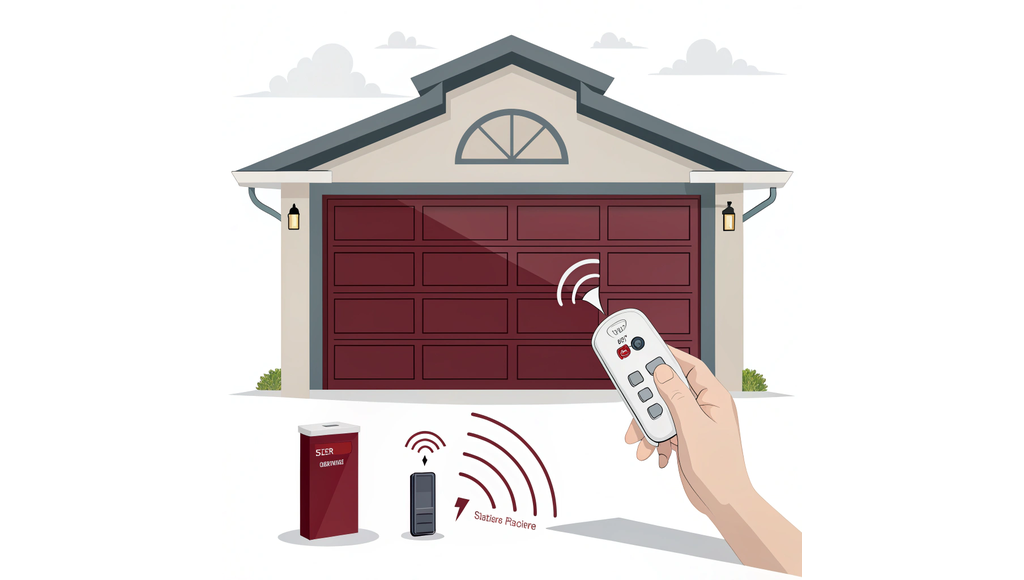
You're running late, you press your garage door remote, and nothing happens. You press it again. Still nothing. Before you assume the worst and start shopping for expensive repairs, take a breath. About 80% of garage door remote failures come down to three fixable problems, and most of them take less than 15 minutes to solve. Half the time, you're looking at a dead battery that costs five bucks to replace.
The key is diagnosing the issue methodically. Your remote connects to your opener through a radio signal, and that connection can break at several points. Sometimes it's the power source in your hand. Sometimes it's interference blocking the signal. Sometimes the opener just forgot your remote exists and needs a quick reminder. Let's walk through each possibility, starting with the easiest fixes first.
Did You Know? Dead or weak batteries cause 50% of all garage door remote failures, but only 40% of homeowners check the battery before calling for service.
Start with the battery and basic checks
Replace your remote battery first, even if you replaced it recently. Batteries can fail unpredictably, and this two-minute check eliminates the most common culprit. Look for a dim or missing LED light when you press the remote button. That's your clearest sign the battery is dying. Most remotes use CR2032 coin batteries or AA lithium cells, both available at any drugstore for under $15.
Here's a simple range test. Walk to the end of your driveway, about 100 feet from the garage. Press the remote. A healthy remote should work from this distance. If you need to stand within 10 feet of the door for it to respond, you've got a weak battery or a signal problem.
Now test your wall button. If the wall-mounted button inside your garage opens the door fine, you've confirmed the opener itself works. That narrows your problem to the remote, not the motor unit or door mechanism. This distinction matters because it tells you whether you're fixing a $10 remote issue or potentially calling a professional for opener troubleshooting.
| What You See | What It Means | Next Step |
|---|---|---|
| No LED light when pressed | Dead battery | Replace battery immediately |
| Dim LED light | Weak battery | Replace battery soon |
| Works close, not far | Low power or interference | Check battery, then antenna |
| Wall button works, remote doesn't | Remote issue only | Continue troubleshooting remote |
Fix signal interference and positioning issues
Your garage door remote sends a radio signal at 315 to 390 MHz, and dozens of household devices operate on similar frequencies. In 2026, interference problems jumped 30% compared to previous years, mostly because of new smart home devices, LED bulbs, and Wi-Fi security cameras. If your battery is fresh but your remote still won't work, something might be blocking or overwhelming the signal.
Start by looking at the antenna on your opener unit. That's the short wire hanging down from the motor housing. Make sure it's visible, straight, and not tucked behind anything. A bent or damaged antenna cuts your signal strength in half. If it looks damaged, straightening it might restore full function.
Try powering off nearby electronics one at a time. Turn off your Wi-Fi router, LED shop lights, or wireless security cameras, then test the remote. If it suddenly works, you've found your interference source. You might need to reposition that device or the opener's antenna. Sometimes moving the antenna just a few inches away from metal garage door tracks makes all the difference.
Check if vacation mode or lock mode got activated accidentally. This happens in about 10% of cases when someone holds the wall button too long. Press and hold your wall panel button for 5 to 10 seconds. If the light flashes, you've just deactivated the lock. Similar signal issues can affect your garage door sensors, so if you're having multiple problems, check those too.
Reprogram your remote in under 5 minutes
Power outages and electrical surges can wipe your remote's programming from the opener's memory. The fix takes five minutes once you know where to look. Find the "Learn" button on your garage door opener motor unit. It's usually on the back or side panel, and it might be red, orange, or purple depending on your opener brand.
Press the Learn button once. You'll see an LED light start flashing. You've got 30 seconds to complete the next step, so have your remote ready. Within those 30 seconds, press and hold the button on your remote that you want to program. Hold it until the opener's light blinks or you hear a click. That's it. Your remote is programmed.
Most openers can store between 8 and 50 remote codes, depending on the model age. If you're programming multiple remotes, repeat this process for each one. Press the Learn button, then press the remote button within 30 seconds. The opener doesn't care how many remotes you add, as long as you stay within its memory limit.
Pro Tip: If you have a smart garage door opener, check for firmware updates through the manufacturer's app before assuming your remote is broken. Software glitches cause 10% of smart opener remote failures in 2026 models.
If programming doesn't work after two attempts, your remote might have internal damage or your opener's receiver board could be failing. At that point, you're looking at replacement rather than reprogramming. For keypads using similar technology, the programming process follows the same basic steps.
Know when to replace vs. repair
A new battery costs $5 to $15 and fixes half of all remote problems. A replacement remote runs $20 to $50 and handles another 30%. Professional diagnosis and repair averages $150 to $375, but you only need that level of service if your DIY troubleshooting hits a wall. Understanding these cost tiers helps you decide how much effort to invest before calling for help.
Replace your remote when you see physical damage like cracked cases, worn buttons that don't click properly, or water damage inside the battery compartment. Remotes typically last 5 to 10 years with normal use. If yours is older and acting up, replacement makes more sense than troubleshooting a dying circuit board.
Watch out for cheap universal remotes. They work initially but desync 30% faster than name-brand replacements, often failing within six months. Stick with remotes made for your specific opener brand when possible. You'll find detailed cost comparisons for remotes and keypads that break down which options last longest.
| Solution | Cost | Time Required | Success Rate |
|---|---|---|---|
| Battery replacement | $5-$15 | 2 minutes | 50% |
| Signal interference fix | $0 | 5-10 minutes | 20% |
| Reprogramming | $0 | 5 minutes | 15% |
| New remote purchase | $20-$50 | Same day | 30% |
| Professional service | $150-$375 | 1-2 hours | 95% |
Safety Note: While troubleshooting your remote, test your garage door's auto-reverse function. Place a board flat on the ground where the door closes. The door should reverse when it touches the board. If it doesn't, stop using the opener and call a professional immediately.
If you've replaced the battery, eliminated interference, and reprogrammed successfully but your remote still won't work, the problem likely sits with the opener's receiver board. That's a professional repair. The receiver might need replacement, which costs $200 to $500 including labor. At that point, consider the age of your entire opener system before investing in receiver repairs.
Getting back in business
Most garage door remote problems resolve within 30 minutes using the three-phase approach we've covered. Start with a fresh battery, check for signal interference, and reprogram if needed. You'll fix 80% of issues without spending more than $15 or calling anyone.
The remaining 20% typically involve worn-out remotes or opener receiver problems that need professional attention. You've done your due diligence if you've worked through these steps. There's no shame in calling for help when DIY troubleshooting reaches its limit.
For broader garage door issues beyond just the remote, our main Garage Door Repair Guide covers everything from spring problems to complete system diagnostics. When you need professional help, GarageDoorHandbook connects you with vetted local contractors who can diagnose and fix persistent remote issues, usually in a single visit with transparent pricing.
FAQs
Why did my garage door remote suddenly stop working?
Dead batteries cause half of all sudden remote failures. Other common reasons include accidental activation of vacation/lock mode, power outages that erased programming, or new electronic devices creating signal interference. Smart home gadgets, LED lights, and Wi-Fi routers added near your garage can block the radio signal. Test your wall button first. If it works but the remote doesn't, you've isolated the problem to the handheld device rather than your opener.
How do I know if my garage door remote needs new batteries or replacement?
Check the LED light when you press the button. A dim or missing light means dead batteries. Replace them and test from 100 feet away. A healthy remote works from your driveway's end. If fresh batteries don't help, look for physical damage like cracked casing or worn buttons. Remotes older than 5 years with persistent issues after battery replacement and reprogramming usually need complete replacement.
Can I reprogram my garage door remote myself?
Yes, programming takes under 5 minutes. Find the Learn button on your opener's motor unit. Press it once and wait for the LED to flash. Within 30 seconds, press and hold your remote button until you hear a click or see the opener light blink. That's it. Most openers store 8 to 50 remotes. If two programming attempts fail, your remote likely has internal damage.
What should I do if my garage door remote works sometimes but not always?
Inconsistent performance usually means weak batteries or signal interference. Replace the battery first, even if it's recent. Then check for new electronics near your garage like LED bulbs, security cameras, or Wi-Fi devices. Test your remote after powering off each device individually. Also inspect the antenna wire hanging from your opener unit. A bent or tucked antenna cuts signal strength in half.